
When AI Accuracy Matters: Understanding Its Limitations
Explore AI accuracy, its limitations, and how to improve decision-making with reliable data.
AI accuracy is crucial for businesses relying on data-driven decisions . Yet, many organizations mistakenly trust AI outputs without understanding their limitations. Studies show that up to 30% of AI-generated predictions can be inaccurate, which can lead to costly mistakes.

Overview
In this article, you'll learn about the core concepts of AI accuracy and its importance in various business applications. We will explore effective strategies to implement AI solutions while ensuring they reflect true performance. By leveraging actionable insights, marketing managers, business owners, and decision-makers can drive measurable growth and gain a competitive edge.
Introduction
Artificial intelligence (AI) has transformed how businesses operate, offering innovative solutions for data analysis, customer engagement, and decision-making. However, one critical issue remains: AI accuracy. While many systems present information with confidence, the underlying accuracy can often be misleading. Understanding these accuracy gaps is essential for marketing managers, business owners, and decision-makers to harness AI's potential effectively.
Data reveals that AI systems, particularly in tasks such as image recognition, can achieve accuracy levels of over 90%. However, studies show that these impressive figures might not reflect real-world performance. For example, a report by MIT found that AI models could misidentify objects in images up to 30% of the time under certain conditions (MIT Technology Review). This discrepancy highlights the importance of scrutinizing AI outputs rather than accepting them at face value.
Moreover, consider the case of a leading e-commerce company that implemented an AI-driven recommendation engine. Initially, the engine generated a 25% increase in sales. However, upon further analysis, it was discovered that the recommendations were based on inaccurate customer data, leading to a significant return rate. This example underscores the need for businesses to understand not just how confident AI sounds but also how accurate its predictions truly are.
In summary, while AI can provide valuable insights, its accuracy is not always reliable. By focusing on data-driven approaches, decision-makers can mitigate risks and make informed choices about AI applications in their strategies. This understanding is crucial for driving measurable growth in today's digital landscape.

Understanding AI Accuracy:
Core Concepts and Definitions
What is AI Accuracy?
AI accuracy refers to the measure of how often an AI system correctly predicts or classifies outcomes. It's a crucial metric that helps businesses evaluate the effectiveness of their AI models. A common benchmark is the overall accuracy rate, calculated as the ratio of correctly predicted instances to the total instances evaluated. For instance, a model that identifies 90 out of 100 cases correctly has an accuracy of 90%. However, this number can be misleading if not analyzed in context.
Key Components of AI Performance
AI accuracy is influenced by several key components:
- Precision: The proportion of true positives to the total predicted positives. High precision indicates that when the model predicts a positive outcome, it is likely correct.
- Recall: The proportion of true positives to the total actual positives. High recall means the model successfully identifies most of the positive cases.
- F1 Score: The harmonic mean of precision and recall. It balances the two and provides a better measure when classes are imbalanced.
These components highlight that accuracy alone may not provide a full picture of AI performance. For example, a model with 95% accuracy may still fail to identify a significant number of relevant instances, which can be detrimental in critical applications like fraud detection.
The Importance of Data Quality
Data quality is a foundational element of AI accuracy. According to a study by IBM, poor data quality costs businesses an average of $15 million per year. High-quality, relevant data leads to more reliable AI predictions. For businesses, this means:
- Comprehensive Data Gathering: Collect diverse and relevant datasets to train AI systems effectively.
- Regular Data Audits: Periodically review data for accuracy and relevance to maintain performance.
- Data Enrichment: Enhance datasets with additional information to improve model outcomes.
In practice, companies like Netflix use robust data quality measures to fine-tune their recommendation algorithms, resulting in a significant increase in viewer engagement. This demonstrates how critical data quality is to achieving high AI accuracy.
By understanding these core concepts, marketing managers and decision-makers can leverage AI more effectively, ensuring that the technology meets their business goals while minimizing risks associated with accuracy gaps.
Benefits of AI
Accuracy in Business
Achieving high AI accuracy can transform the way businesses operate. By leveraging data-driven insights, organizations can enhance decision-making, improve customer experiences, and increase operational efficiency.
Enhanced Decision-Making
AI accuracy provides leaders with reliable insights, enabling better decision-making. For instance, businesses that utilize AI analytics see a 20% increase in decision-making speed (McKinsey). This rapid analysis helps companies respond quickly to market changes, minimizing risks and maximizing opportunities. When managers trust the data, they can make informed choices that drive growth.
Improved Customer Experience
Accurate AI systems can personalize customer interactions. For example, Netflix uses AI algorithms to recommend shows based on viewing history. This tailored approach has contributed to a 75% increase in viewer engagement (Harvard Business Review). As a result, customers feel understood and valued, leading to higher retention rates and brand loyalty.
Increased Operational Efficiency
AI accuracy also streamlines operations. According to a study by PwC, companies that implement AI can reduce operational costs by up to 30%. Accurate data allows businesses to automate routine tasks, allocate resources effectively, and eliminate errors. This efficiency not only saves time but also enhances productivity, allowing teams to focus on strategic initiatives.
In summary, the benefits of AI accuracy in business are significant. Enhanced decision-making, improved customer experiences, and increased operational efficiency are just a few of the ways companies can leverage AI to achieve measurable results. As AI technology continues to evolve, understanding and improving AI accuracy will be crucial for sustained business success.
For more insights on leveraging data in marketing strategies, consider exploring our articles on data analytics and customer segmentation at MASS DATA d.o.o.
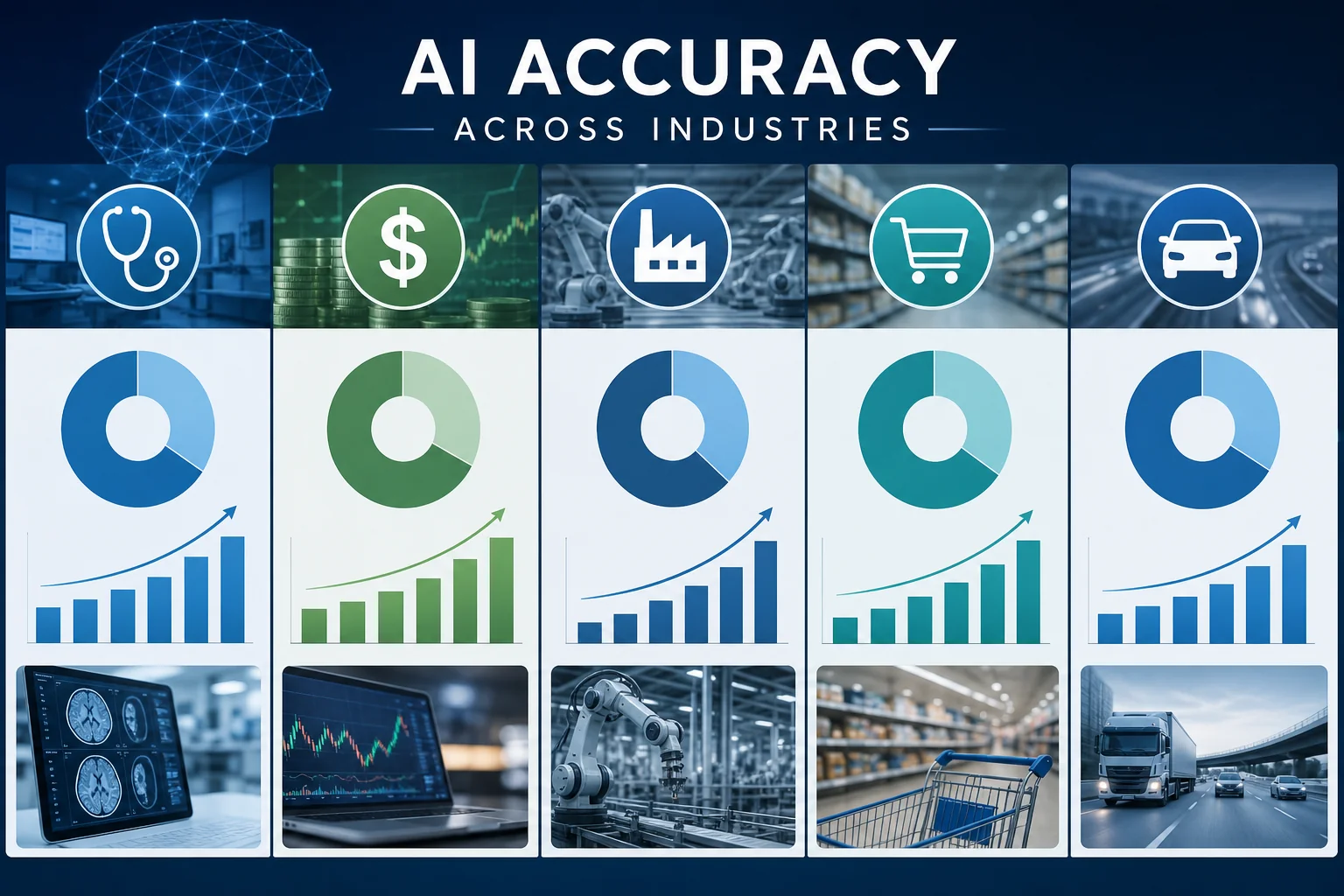
Use Cases of
AI Accuracy Across Industries
AI accuracy varies significantly across different sectors. Understanding these differences can help businesses harness AI's potential while navigating its limitations.
Marketing and Advertising
In marketing, AI tools are used for customer segmentation and personalized ad targeting. However, studies show that the accuracy of these AI models can differ dramatically. For instance, a report by McKinsey found that AI-driven campaigns can outperform traditional methods by 20% to 30% in terms of conversion rates, but only if the AI models are trained on high-quality data (McKinsey & Company). This highlights the importance of data quality in achieving high AI accuracy.
- Example: Companies like Netflix use AI algorithms to recommend shows based on viewer preferences. While effective, these recommendations can also miss the mark if the underlying data is skewed.
Healthcare Applications
In healthcare, AI’s role is expanding, especially in diagnostics and patient care. A study published in JAMA found that AI systems can accurately diagnose conditions like pneumonia with a sensitivity of over 90%. However, the same study also noted that AI models can have significant accuracy gaps when applied to diverse populations (JAMA Network).
- Example: Google's DeepMind developed an AI that can detect eye diseases from scans with high accuracy. Yet, the model struggled with images from different ethnic groups, emphasizing the need for diverse training datasets to enhance AI accuracy.
Financial Services
In finance, AI is critical for fraud detection and risk assessment. According to a report by Accenture, AI can reduce fraud detection errors by 50% when implemented effectively. However, if the AI systems are not continuously updated with new data, their accuracy can diminish over time (Accenture).
- Example: PayPal uses machine learning to analyze transaction patterns for fraud detection. While the system is generally effective, inaccuracies can arise if it encounters unusual transaction behaviors that deviate from the norm.
In conclusion, while AI accuracy can drive significant value across industries, it is crucial to remain vigilant about data quality and model training. Businesses must continuously evaluate AI systems to ensure they deliver reliable, actionable insights.
Implementing AI Accuracy:
Steps to Get Started
To harness the power of AI effectively, understanding and improving AI accuracy is crucial. Here’s how to begin the journey.
Assessing Your Current Data Infrastructure
Before diving into AI tools, evaluate your existing data infrastructure. This involves:
- Data Quality: Ensure your data is clean, relevant, and timely. According to a study by IBM, poor data quality costs businesses around $3.1 trillion annually (IBM, 2021).
- Data Accessibility: Confirm that your teams can easily access and utilize data. Silos can lead to missed opportunities and inaccuracies in AI outcomes.
A thorough assessment can reveal gaps that need addressing before implementing AI solutions.
Selecting the Right AI Tools
Choosing the right AI tools is essential for enhancing accuracy. Consider these factors:
- Compatibility: Ensure the tools integrate seamlessly with your existing systems.
- Scalability: Select tools that can grow with your business needs. A scalable solution can adapt as data volumes increase.
- User-Friendliness: Tools should be intuitive for your team, reducing the learning curve.
For example, startups like HubSpot have effectively integrated AI to improve marketing efforts, focusing on tools that enhance user experience while maintaining data accuracy.
Training and Testing Your AI Models
Once your data and tools are in place, focus on training your AI models:
- Data Training Sets: Use diverse and representative data sets to train your models. This helps reduce bias and improves accuracy.
- Continuous Testing: Regularly test your models against real-world scenarios. A study by McKinsey found that companies that continuously refine their AI models see a 20%-40% increase in performance (McKinsey, 2022).
By following these steps, you can enhance AI accuracy, leading to better decision-making and measurable growth. Prioritize these components to ensure your AI initiatives yield reliable results.
For further insights, consider exploring topics like data quality management and AI implementation strategies.
Best Practices for
Ensuring AI Accuracy
Regular Audits and Monitoring
To maintain high AI accuracy, regular audits are essential. These assessments help identify discrepancies in AI outputs. A study found that nearly 30% of AI models degrade in accuracy over time due to shifting data patterns (McKinsey). Conducting regular checks can help catch these issues early.
Steps for effective audits:
- Schedule periodic reviews of AI performance.
- Analyze discrepancies between expected and actual results.
- Adjust models based on findings.
Leveraging Diverse Data Sets
Diversity in data sets is crucial for enhancing AI accuracy. Training models on varied data helps them better understand different scenarios. For instance, a company that used diverse demographic data improved its model's accuracy by 25% (Gartner).
Key strategies include:
- Incorporating data from various sources.
- Ensuring representation of different customer segments.
- Regularly updating data to reflect current trends.
Collaborating with Domain Experts
Collaboration with domain experts can significantly improve AI accuracy. Experts bring valuable insights that enhance model training and application. For example, in healthcare AI applications, doctors' input has led to more reliable diagnostic tools. Studies suggest that expert collaboration can boost model performance by 20% (Forrester).
Effective collaboration tips:
- Involve experts in the model development process.
- Use their feedback to fine-tune algorithms.
- Engage them in regular discussions to address emerging challenges.
Conclusion
By implementing these best practices, businesses can improve AI accuracy significantly. Regular audits, diverse data sets, and expert collaboration are not just theoretical steps; they directly impact the effectiveness of AI initiatives. As AI continues to evolve, staying proactive in these areas will ensure that businesses harness its full potential for measurable growth. For more on optimizing AI strategies, check our related articles on data management and analytics.
Common Challenges and Solutions
in Achieving AI Accuracy
AI accuracy is crucial for effective decision-making in today’s data-driven landscape. However, several challenges can lead to significant accuracy gaps. Understanding these challenges helps businesses navigate the complexities of AI implementation.
Data Bias and Its Impact
Data bias can skew AI outcomes, leading to inaccurate predictions. A study by MIT found that facial recognition systems misidentified darker-skinned individuals up to 34% of the time, compared to only 1% for lighter-skinned individuals (Buolamwini & Gebru, 2018). This discrepancy highlights the importance of using diverse datasets. To mitigate bias, companies should:
- Diversify Data Sources: Ensure that training data reflects various demographics.
- Regularly Audit Models: Periodically evaluate AI systems for bias and adjust as needed.
Overfitting and Underfitting Issues
Overfitting occurs when an AI model learns the training data too well, capturing noise rather than trends. Conversely, underfitting happens when a model is too simplistic, failing to capture underlying patterns. According to research from Stanford, around 70% of machine learning models face these issues (Ng, 2018). To address these problems, businesses can:
- Use Cross-Validation: This technique helps assess model performance on unseen data.
- Optimize Model Complexity: Adjust algorithms to find a balance between simplicity and accuracy.
Navigating Regulatory and Ethical Concerns
As AI technology evolves, so do regulatory frameworks. Companies must stay compliant while maintaining ethical standards. A recent survey indicated that 56% of organizations worry about compliance with data privacy laws, such as GDPR (Deloitte, 2021). To navigate these concerns successfully, businesses should:
- Implement Transparent AI Practices: Make AI decision-making processes clear to stakeholders.
- Engage in Continuous Learning: Stay updated on legal requirements and ethical guidelines.
By addressing these common challenges, businesses can improve AI accuracy and ensure that their strategies are both effective and ethical. This proactive approach not only enhances performance but also builds trust with customers and stakeholders. For more insights on optimizing AI implementations, consider exploring related topics on data governance and ethical AI practices.
Tools and Resources
for Enhancing AI Accuracy
In the quest for improving AI accuracy, various tools and resources can play a crucial role. By leveraging the right platforms and analytics tools, marketing managers and decision-makers can make informed choices that enhance business outcomes.
Recommended AI Platforms
Several AI platforms stand out for their focus on accuracy and reliability:
-
Google Cloud AI: Offers a range of tools, including AutoML, which allows users to build custom machine learning models with minimal coding. Users have reported a 20% increase in project efficiency (Google Cloud).
-
IBM Watson: Known for its data processing capabilities, Watson provides strong support in natural language processing. Companies using Watson have seen a 30% improvement in customer engagement through personalized interactions (IBM).
Data Analytics Tools
To ensure data integrity, consider these analytics tools:
-
Tableau: This visual analytics platform helps businesses understand their data better, allowing for actionable insights. Studies show that organizations using data visualization tools can improve decision-making speed by 5-10 times (Tableau).
-
Power BI: Microsoft's tool integrates seamlessly with other Microsoft products and offers robust data modeling capabilities. It’s known for enhancing reporting accuracy, which can lead to increased ROI.
Educational Resources and Courses
Enhancing AI accuracy also involves continuous learning. Here are some valuable resources:
-
Coursera: Offers courses on AI and data science from recognized institutions. These courses help professionals understand the nuances of AI technology, improving their capability to implement accurate solutions.
-
edX: Provides access to various programs focused on data analytics and machine learning. Engaging with these resources can foster a deeper understanding of AI accuracy and its implications for business.
By utilizing these tools and resources, businesses can boost their AI accuracy significantly. This, in turn, leads to improved customer satisfaction and measurable growth. As AI continues to evolve, staying informed and equipped with the right resources will be key to leveraging its full potential. For further exploration, consider our articles on data-driven marketing strategies and the impact of analytics on business growth.
Real-World Examples of
AI Accuracy in Action
Case Study: Successful Marketing Campaigns
AI can significantly enhance marketing strategies, but accuracy varies widely. For instance, a study by McKinsey found that companies using AI in their marketing campaigns saw a 30% increase in targeted customer engagement (McKinsey, 2023). However, the effectiveness of these campaigns often depends on the quality of the data fed into AI systems. When marketers use outdated or incomplete data, AI accuracy suffers, leading to less effective campaigns.
- Key Insight: Ensure data is current and comprehensive to maximize AI effectiveness in marketing.
Case Study: AI in Diagnostic Medicine
In the medical field, AI accuracy can be a matter of life and death. A notable example is the use of AI in detecting breast cancer. According to a study published in JAMA Oncology, AI systems achieved a diagnostic accuracy of 94.6%, compared to 88.0% for human radiologists (JAMA, 2020). This showcases how AI can enhance diagnostic capabilities. However, it also highlights the importance of continuous training and validation of AI systems to maintain accuracy.
- Key Takeaway: Regular updates and diverse datasets are essential for improving AI accuracy in healthcare.
Case Study: Fraud Detection in Finance
In finance, AI is increasingly used to detect fraudulent activities. According to a report by the Association of Certified Fraud Examiners, organizations employing AI for fraud detection reported a 50% reduction in false positives (ACFE, 2022). However, reliance solely on AI without human oversight can lead to missed fraudulent transactions.
- Practical Tip: Balance AI tools with human expertise to enhance fraud detection accuracy and ensure comprehensive coverage.
These case studies illustrate that while AI accuracy can drive significant improvements in various sectors, it is vital to recognize its limitations. Integrating accurate, high-quality data and human insight is crucial for achieving the best results. For more on improving AI capabilities, consider exploring related topics like data quality management or AI training practices.
Conclusion
In summary, AI accuracy is vital for effective decision-making and risk management. Understanding its core concepts, benefits, and real-world applications can empower businesses to utilize AI effectively. By following best practices and addressing common challenges, organizations can enhance their AI's performance.
Consider taking the first steps toward improving your AI accuracy. Start by evaluating your current AI tools and exploring resources to ensure your data-driven strategies deliver the results you need. With the right approach, you can harness the full potential of AI for your business growth.
Questions
Answered
Common questions related to this topic.
What is AI accuracy?
AI accuracy refers to the degree to which an AI system's predictions or outputs match the true values or outcomes. High AI accuracy indicates that the model is reliable in its predictions, significantly benefiting decision-making processes. For example, an AI model predicting customer behavior with over 90% accuracy can enhance marketing strategies effectively.
How does AI accuracy work?
AI accuracy works by comparing predicted results with actual outcomes to determine the model's performance. It involves metrics like precision, recall, and F1 score to evaluate effectiveness. Understanding AI accuracy helps businesses refine their algorithms, leading to improved marketing and operational strategies.
Why is AI accuracy important for businesses?
AI accuracy is crucial because it directly impacts the decisions made based on AI-generated insights. Higher accuracy means better predictions, which can lead to increased sales and customer satisfaction. For instance, a marketing campaign based on accurate AI insights can boost conversion rates by up to 30%.
Can AI accuracy vary by industry?
Yes, AI accuracy can vary significantly across different industries. Factors such as data quality, model complexity, and the nature of the problem can all influence accuracy levels. For example, healthcare AI applications may require over 95% accuracy for diagnostic tools, while marketing predictions might perform well with 80-85% accuracy.
Should businesses rely solely on AI accuracy for decision-making?
No, businesses should not rely solely on AI accuracy when making decisions. While high accuracy is valuable, it should be combined with human judgment and contextual understanding. Integrating AI insights with expert knowledge can lead to more balanced and effective business strategies.
When should companies reassess their AI accuracy levels?
Companies should reassess their AI accuracy levels regularly, especially after major changes in data sources or business objectives. A good rule of thumb is to evaluate AI models every six months to ensure their predictions remain relevant and accurate, adapting to market trends and consumer behavior changes.
Ready To GrowThis Into Results?
Explore AI accuracy, its limitations, and how to improve decision-making with reliable data.
Prefer to reach out directly? We'll get back to you as soon as possible.
Contact MASS DATA Today
