
From Plateau to Predictable Lead Flow: Mass Data and InfluxJuice Scale a Dental Implant Lead Engine
How a stalled healthcare growth system became a scalable Google Ads and tracking engine, moving from low monthly lead flow to consistent high-volume performance.
Leads per month after rebuilding the performance and measurement foundation around high-intent dental implant demand.
Scaling healthcare leads required more than a media tweak
The dental implant provider had strong commercial potential, but lead volume had plateaued at roughly 20 leads per month. The account was not structured for scale, and measurement gaps made it difficult to diagnose what was working, what was leaking, and where budget could be pushed with confidence.
- Rebuild Google Ads so campaigns could learn faster and scale cleanly.
- Create a tracking foundation across browser-side and server-side measurement.
- Establish a high-cadence optimization process to keep growth stable.
Mass Data rebuilt performance and measurement in parallel
Mass Data partnered with InfluxJuice to execute the turnaround. Instead of treating paid media, landing flow, and tracking as separate tasks, the team rebuilt them as one connected growth system.
Google Ads rebuilt around high-intent implant demand
Campaign and ad group architecture was tightened to reduce overlap, improve relevance, protect query intent, and keep conversion signals clean as volume increased.
Browser-side tracking deployed through GTM
Lead tracking was standardized with a consistent completion trigger, helping platforms optimize from reliable form completion signals.
Server-side tracking implemented with sGTM
Server-side GTM strengthened measurement reliability and maintained cleaner data flows under modern browser and privacy constraints.
A disciplined optimization cadence
The team continuously reviewed search terms, match behavior, ad relevance, landing flow mechanics, delivery stability, and signal integrity.
How the lead engine gained momentum
The goal was not a temporary spike. The goal was controlled growth: better demand capture, stronger conversion feedback, and cleaner data flowing back into optimization.
Protect intent before pushing scale
Search term reviews and negative keyword work prevented query drift as spend and reach increased.
Align ads to consultation intent
Ad iteration focused on people actively considering dental implant consultations, not broad generic dental messaging.
Strengthen the measurement loop
Browser-side and server-side tracking gave the account more consistent conversion data as traffic grew.
Keep optimization high-cadence
Frequent iteration across ads, queries, landing flow, auction dynamics, and QA helped growth ramp without becoming volatile.
A closer look at the performance and tracking setup
These screenshots support the three core proof points behind the turnaround: Google Ads conversion growth, browser-side GTM deployment, and server-side GTM configuration.
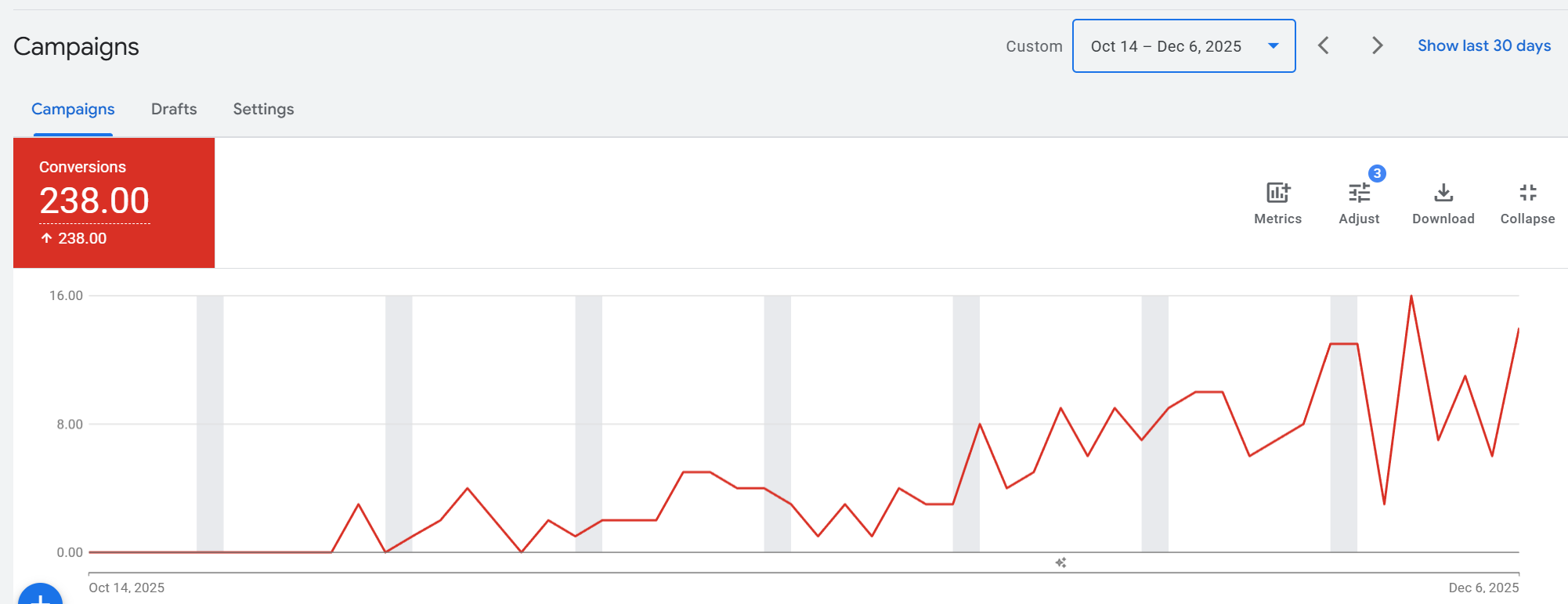
This screenshot shows the Google Ads scaling window with 238 recorded conversions. It supports the main result from the case study: lead volume moved from roughly 20 leads per month to 200+ leads per month.
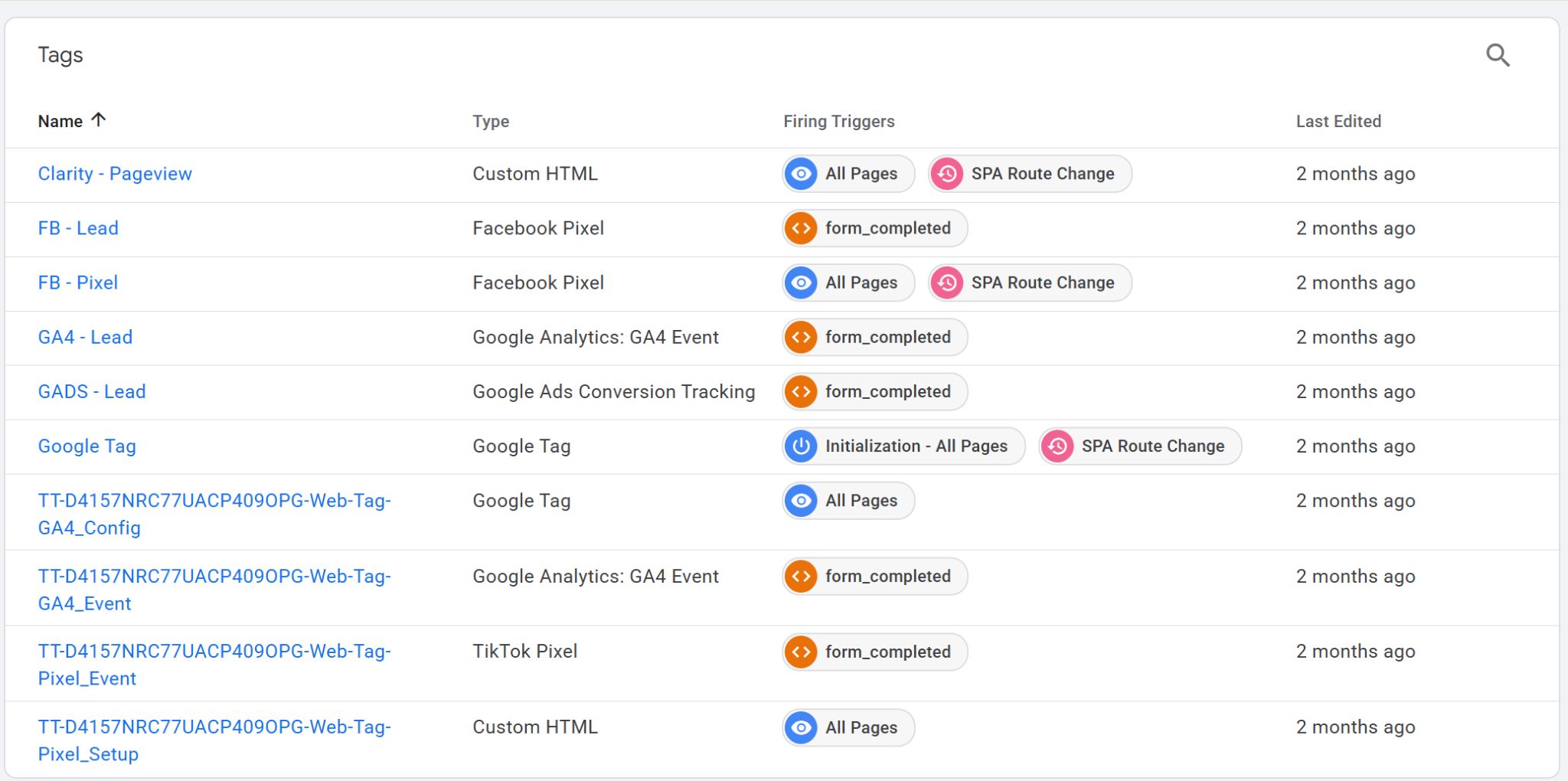
This screenshot shows the browser-side GTM setup used to standardize the lead completion event. A cleaner form completion signal helped Google Ads optimize from more consistent conversion data.

This screenshot shows the server-side tracking layer used to strengthen measurement reliability. It helped keep data flows cleaner as paid traffic and conversion volume increased.
The results: from low lead flow to a scalable acquisition engine
The rebuild created a clear shift from stalled performance to consistent monthly lead generation, supported by stronger campaign structure and cleaner measurement.
Reliable growth came from cleaner signals and tighter execution
In competitive healthcare, volume growth changes everything. Query intent widens, auctions become more volatile, and small measurement gaps can quickly distort optimization. Mass Data rebuilt Google Ads around high-intent implant demand, then protected scale with continuous search-term control, tighter relevance, and conversion-focused iteration.
At the same time, browser-side and server-side tracking kept conversion signals more consistent as traffic increased. With reliable measurement and a disciplined optimization cadence, performance did not rely on a short-term lift, it ramped and held.
Build a performance engine you can measure, trust, and scale
Mass Data partners with ambitious brands and high-spend advertisers to build marketing systems powered by senior paid media execution, technical tracking capability, structured reporting, and reliable attribution.
