White Label Client Reporting: How Better Reports Strengthen Agency Partnerships
Learn how white label client reporting helps agencies deliver accurate branded dashboards, clearer insights, and more scalable client communication.

White Label Client Reporting That
Builds Trust Without Adding Delivery Overhead
White label client reporting allows agencies to deliver clear, branded performance insights while specialist partners handle some or all of the data collection, dashboard development, analysis, or reporting work behind the scenes. Done well, clients experience one consistent agency relationship rather than a collection of disconnected suppliers.
But branding alone does not make a report valuable. A polished dashboard can still damage trust if the numbers are inaccurate, the KPIs do not reflect the client's goals, or nobody explains what changed and why.
In this guide, you will learn:
-
What effective white-label reporting should actually include
-
How agencies can maintain accuracy while outsourcing reporting
-
Which reporting practices improve client conversations
-
How to scale reporting without turning dashboards into generic templates
What White Label
Client Reporting Actually Means
White label client reporting is a delivery model in which analytics, dashboards, or performance reports are prepared with support from an external provider but presented as part of the agency's own service.
The agency remains responsible for the client relationship, strategy, and final quality.
That distinction matters. White labeling should not mean hiding important information or preventing clients from understanding their performance. It simply separates client-facing ownership from behind-the-scenes fulfillment.
A reporting partner may connect data sources, build dashboards, automate refreshes, prepare recurring reports, verify metrics, or help interpret results. The exact division of responsibility depends on the agency.
Mass Data's article on white label Google Analytics for agencies shows why outsourced analytics should extend beyond putting an agency logo on a dashboard. If the underlying measurement is unreliable, professional presentation cannot make the reporting trustworthy.
Reporting Quality Starts Before
the Dashboard Is Built
The fastest way to produce a weak report is to begin with the dashboard.
Before deciding which charts to display, the agency should understand the client's commercial objectives and determine which data sources can measure them reliably.
A lead-generation client may care about qualified leads, booked calls, opportunities, acquisition cost, and eventual revenue. An ecommerce business may prioritize revenue, ROAS, repeat purchases, contribution margin, or average order value.
Traffic, impressions, clicks, and engagement metrics can still provide context, but they should not automatically dominate the report just because they are easy to retrieve.
The reporting team also needs agreed definitions.
What counts as a lead? Is revenue gross or net? Does a conversion represent a form submission, a qualified opportunity, or a sale? Which attribution model is being used?
Without clear definitions, two dashboards can display technically correct numbers while telling completely different stories.
This is why good reporting begins with measurement design rather than visual design.
White Label Client Reporting Should
Explain Performance, Not Just Display It
Clients do not hire an agency simply to receive data they could already access in Google Ads, GA4, Meta Ads, Shopify, or their CRM.
They need interpretation.
A strong report should tell them what happened, whether it matters, what probably contributed to the change, and what the agency plans to do next.
Suppose paid media spend increased by 25% while CPA increased slightly and total qualified opportunities grew substantially. A basic dashboard may highlight the higher CPA in red. A useful report explains that the additional spend intentionally expanded acquisition and generated more valuable pipeline despite the higher unit cost.
Context changes the conversation.
This is also why dashboards should avoid presenting every movement as inherently positive or negative. Lower CPC is not automatically good. Higher traffic is not automatically growth. More leads are not necessarily valuable if sales rejects most of them.
Mass Data's guide to white-label remarketing ads management illustrates the same principle in paid media: campaign numbers only become meaningful when audience quality, tracking, attribution, and commercial outcomes are considered together.
Build Dashboards Around
Decisions, Not Available Metrics
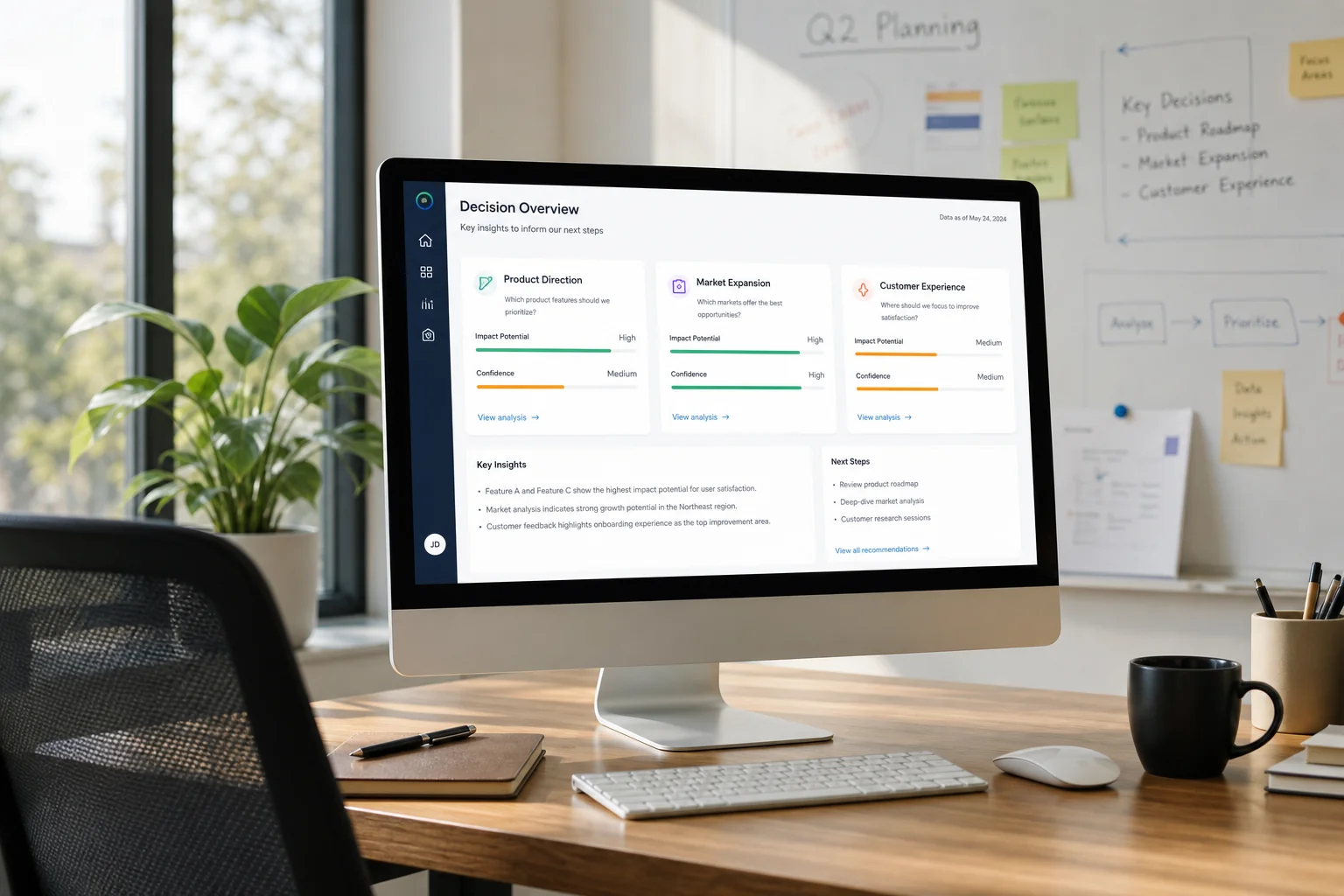
Reporting tools can expose enormous amounts of data. That does not mean all of it belongs on the first page.
The best dashboards create a hierarchy.
The opening view should answer the questions executives or clients care about most. Supporting sections can then provide additional detail for marketing teams or specialists who need to investigate performance more deeply.
Dashboarding tools generally connect multiple data sources and let agencies build shareable, customizable reports with interactive controls and a range of visualization types. That flexibility is what makes them capable of serving different audiences within the same client relationship.
Flexibility, however, increases the need for restraint.
Near the middle of the reporting process, agencies should confirm that every client-facing dashboard clearly communicates:
-
The primary business KPIs and how they changed
-
Relevant comparisons with previous periods or targets
-
Which channels or campaigns drove the movement
-
Important tracking or attribution limitations
-
The actions the agency recommends next
Everything else should support those questions rather than compete with them.
Data Accuracy Is Part
of the Client Experience
A dashboard can look perfect while the underlying data is wrong.
Duplicate purchase events can inflate revenue. Broken campaign naming can split performance into inconsistent groups. CRM stages may be updated irregularly. Advertising platforms may attribute conversions differently from analytics tools.
These are not cosmetic problems.
If a client makes budget decisions using incorrect numbers, reporting has failed regardless of how professional the presentation looks.
Agencies therefore need a quality-control process before reports reach clients.
That may involve checking totals against source platforms, validating unusual changes, monitoring broken connectors, reviewing conversion definitions, and documenting known discrepancies between systems.
The same quality discipline appears in other white-label workflows. Mass Data's article on maintaining quality in white-label content marketing services explains why repeatable review stages are necessary whenever deliverables are produced behind another agency's brand.
The principle transfers directly to reporting: outsourcing production does not outsource accountability.
Branding Should Create Consistency,
Not Disguise the Data
Branding matters in white label client reporting, but it should serve the client experience rather than become the entire purpose of the report.
Consistent colors, typography, terminology, logo placement, and layout can make reports feel like a natural extension of the agency's work.
More important is consistency in how information is presented.
If one client report calls the metric "Leads," another calls the same event "Conversions," and a third uses "Actions," unnecessary confusion appears even if every dashboard looks attractive.
Terminology should match the client's business wherever possible.
A property company may think in enquiries and viewings. A SaaS company may care about demos and opportunities. An ecommerce brand will probably understand purchases, revenue, returning customers, and ROAS more readily.
Customization therefore goes deeper than visual identity.
The goal is to make the report feel as though it was built around the client's business rather than around the limitations of the reporting tool.
How White Label Client
Reporting Improves Agency Efficiency
Manual reporting consumes significant account-management time.
Teams export CSV files, copy figures into spreadsheets, update charts, calculate changes, take screenshots, and write recurring summaries. Multiply that across dozens of clients and reporting quickly becomes an operational bottleneck.
Automation can remove much of this repetitive work.
Data connectors can refresh dashboards automatically. Scheduled reporting can reduce manual delivery. Standardized structures can make onboarding new clients faster.
But automation should not eliminate human review.
A connector can fail. A campaign can launch halfway through the period. A conversion definition can change. A large performance movement may require context that no standard dashboard can provide.
Mass Data's white label lead generation agency guide makes a related point: measurement should connect marketing activity with lead quality, pipeline progress, and revenue where the data allows. Automation becomes much more useful when it supports the business question rather than merely moving information between systems.
The efficient model is therefore automated collection with deliberate interpretation.
A Hypothetical White
Label Reporting Scenario

Consider a hypothetical ten-person marketing agency.
The team manages paid media, SEO, and social campaigns for 25 clients. Every month, account managers spend several days pulling information from Google Ads, Meta, GA4, spreadsheets, and CRM systems.
The reports look professional, but the process does not scale.
One client asks why Google Ads revenue differs from Shopify. Another wants lead quality included. A third receives a dashboard with twenty charts but regularly asks the account manager, "So, was this actually a good month?"
The agency introduces a specialist reporting partner.
Instead of immediately rebuilding every dashboard, the partner first maps the data sources and commercial KPIs for each client type. Ecommerce clients receive a reporting framework centered on revenue, acquisition efficiency, products, and customer behavior. Lead-generation clients receive views based on lead volume, qualification, CPA, pipeline movement, and available revenue information.
Data collection becomes automated.
The account manager still reviews each report before delivery and adds a concise interpretation of major changes, optimization decisions, and next steps.
The agency has not removed people from reporting. It has removed repetitive production work so people can spend more time interpreting performance and talking to clients.
That is where white label client reporting creates meaningful operational leverage.
Choosing a White
Label Reporting Partner
The right reporting partner needs stronger capabilities than dashboard design alone.
Agencies should understand how the provider verifies data, manages access, documents integrations, handles broken connectors, distinguishes platform attribution from backend performance, and supports different client KPIs.
Security and communication boundaries should also be clear.
The agency should know whether the provider communicates directly with clients, whose branding appears on reports, who owns dashboard assets, and how access is managed if the relationship ends.
A capable white-label partner may offer client-ready dashboards, KPI reporting, attribution views, and automated reporting alongside paid media, tracking, analytics, SEO, and automation support. This kind of wider fulfillment model can be useful when reporting depends on several technical disciplines rather than one dashboard tool. This kind of wider fulfillment model can be useful when reporting depends on several technical disciplines rather than one dashboard tool.
For businesses or agencies with more complex data environments, business intelligence and data reporting services can extend beyond dashboards into data integration, warehouses, marketing analytics, attribution, and executive reporting.
The right level of support depends on whether the problem is report production or the underlying data infrastructure.
Common Reporting Mistakes
That Weaken Client Trust
One mistake is sending more metrics in response to client uncertainty.
When a client does not understand performance, another ten charts usually do not solve the problem. Better hierarchy and clearer explanation do.
Another mistake is reporting platform conversions without acknowledging differences between advertising platforms, analytics systems, CRMs, and backend revenue.
Templates can also become too rigid. Standardization makes reporting scalable, but forcing every client into the same KPI structure can make reports less relevant.
Agencies should also avoid allowing dashboards to replace conversations entirely.
A reporting system should make client discussions more productive, not eliminate strategic communication.
Finally, reporting should never imply certainty where the data does not support it. If tracking changed halfway through the month or attribution cannot determine exactly which channel deserves credit, say so.
Clear limitations generally build more trust than false precision.
Conclusion
Strong white label client reporting is not about hiding an outsourced partner or producing more impressive dashboards.
It is about giving clients a consistent, trustworthy view of performance while allowing agencies to scale the technical and operational work required to produce that view.
The best systems start with business goals, use reliable data, prioritize meaningful KPIs, automate repetitive work, maintain human quality control, and explain what the numbers actually mean.
When those pieces work together, reporting becomes more than a monthly deliverable. It becomes part of how the agency demonstrates strategic value, manages expectations, and builds longer-term partnerships.
Questions
Answered
Common questions related to this topic.
What is white label client reporting?
White label client reporting allows agencies to provide analytics and reporting services under their clients' brands without disclosing the partnership. This approach ensures that the end client receives customized reports that align with their branding while the agency retains control over data accuracy and presentation.
How does white label client reporting work?
White label client reporting typically involves using specialized tools to create tailored dashboards and reports. Agencies integrate data from various sources into these platforms, presenting insights that clients can trust while keeping the agency's involvement confidential. This helps maintain the client's brand integrity.
Why should agencies use white label client reporting?
Agencies should consider white label client reporting to expand their service offerings without the need for additional hires. It allows them to provide high-quality analytics and insights to clients while focusing on their core competencies, thus enhancing client satisfaction and retention.
When is it best to implement white label client reporting?
Implementing white label client reporting is ideal when an agency experiences increased demand for reporting services or when clients request more frequent updates. Early adoption can streamline the reporting process, improve efficiency, and foster stronger client relationships.
Can white label client reporting improve client satisfaction?
Yes, white label client reporting can significantly enhance client satisfaction by delivering timely, branded reports that are easy to understand. Clients benefit from clear insights into their performance metrics, which can help them make informed decisions and feel more engaged with the agency's services.
Should I be concerned about data privacy with white label client reporting?
Data privacy is a valid concern, particularly with increasing regulations like GDPR and CCPA. Agencies must ensure that their white label reporting solutions comply with these regulations by implementing secure data handling and transparent practices, thus safeguarding client information while maintaining trust.
Ready To GrowThis Into Results?
Learn how white label client reporting helps agencies deliver accurate branded dashboards, clearer insights, and more scalable client communication.
Prefer to reach out directly? We'll get back to you as soon as possible.
Contact MASS DATA Today