MASS DATA — AI Marketing Automation

Marketing Automation Audit: Are You Saving Time?

Discover how a marketing automation audit can transform your efficiency by evaluating your current tools and processes. Identify inefficiencies and optimize your integrations to truly save time and boost productivity in today’s fast-paced marketing world.

In today's fast-paced marketing landscape, efficiency is key. An audit helps you evaluate whether your current tools and processes genuinely save you time and enhance productivity. By critically assessing your automation stack, you can identify inefficiencies and optimize integrations for better results.

Key Takeaways
A marketing automation audit is essential for understanding the effectiveness of your tools. It can reveal whether your processes are streamlined or bogged down by poor configurations.
Regular audits ensure alignment with business objectives and help mitigate risks associated with data quality.
A modern workspace with a laptop, marketing tools, and a flowchart, showcasing efficiency and productivity in automation.

What is a
Marketing Automation Audit?

The audit is a comprehensive evaluation of your marketing tools and processes. It focuses on assessing their performance, integration, and alignment with your business goals. This process can highlight areas where improvements can be made to enhance efficiency.

Key Components of an Audit

When conducting an audit, consider the following components:

  • Tool Assessment: Identify the tools you currently use (e.g., HubSpot, Klaviyo, Zapier) and evaluate their functionalities. Are they meeting your needs?
  • Integration Check: Examine how these tools communicate with one another. For instance, when a lead fills out a form in HubSpot, does it automatically trigger an email in Klaviyo?
  • Process Evaluation: Review your automation workflows. Are they streamlined, or do they have unnecessary steps that could be simplified?
  • Data Quality: Ensure that the data collected is accurate and compliant with regulations like GDPR. Poor data quality can lead to ineffective marketing strategies.

Benefits of Conducting
a Marketing Automation Audit

Conducting one offers several benefits, including identifying inefficiencies in your current setup and ensuring that your tools are effectively integrated. This can lead to improved workflows, better data quality, and ultimately, a more successful marketing strategy.

Time Savings and Efficiency

An audit can help you identify whether your current tools are genuinely saving you time. Often, businesses implement automation with the expectation that it will streamline operations. However, if the tools aren't properly configured, they can actually create additional work.

For example, when a lead fills out a form on your website, it should trigger an automated response. If this process requires manual follow-up or if the data doesn't sync with your CRM, you're wasting valuable time. An audit helps you pinpoint these inefficiencies, allowing you to optimize workflows and free up resources for more strategic tasks.

Enhanced Data Quality and Insights

Another key benefit of an audit is the improvement in data quality and insights. Poor data can lead to misguided marketing efforts and wasted resources. By reviewing your automation stack, you can assess how well your tools, like HubSpot or Klaviyo, are capturing and processing data.

For instance, if you're using Zapier to connect multiple applications, it's crucial to ensure that the data flows seamlessly without duplication or loss. An audit can identify gaps in data integration, helping you establish a more reliable data foundation. This, in turn, provides better insights and enables more informed decision-making.

Steps to Perform
an Automation Stack Review

Identifying Current Tools and Processes

Begin your marketing automation audit by listing all the tools currently in use. Consider platforms like HubSpot for CRM, Klaviyo for email marketing, and Zapier or Make for integrations. Document how each tool is utilized and note their specific functions. For instance, if HubSpot manages lead scoring and Klaviyo handles drip campaigns, capture those details.

Next, assess the processes tied to these tools. Ask questions like:

  • What triggers an email campaign?
  • How are leads captured and entered into the CRM?
  • Are there manual tasks that could be automated?

By understanding your existing workflows, you can pinpoint areas where automation could be streamlined or improved.

Assessing Integration and Performance

Once you have a clear inventory, evaluate how well these tools integrate with one another. Effective integrations can enhance performance significantly. For example, when a lead fills out a form on your website, this should automatically trigger a sequence in your email marketing tool (like Klaviyo) to send a welcome email. Check if your tools are communicating as intended.

Look for the following:

  • Are there any gaps in data transfer between systems?
  • Is data consistently updated across platforms?
  • Are there any delays in processes that could affect lead engagement?

Review performance metrics as well. This includes open rates for emails, lead conversion rates, and the time spent on manual tasks. Understanding these metrics will help you determine if your current stack is indeed saving time or if adjustments are necessary.

Best Practices for a
Successful Marketing Tech Audit

Diverse professionals collaborate in a bright office, analyzing data on a screen during a marketing tech audit.

Regular Assessments and Adjustments

Conducting a marketing automation audit should not be a one-time task. Regular assessments are essential to ensure your tools are still aligned with your business goals. Start by setting a schedule for evaluations - perhaps quarterly or biannually. During these audits, review your current automation stack for efficiency and effectiveness.

Ask yourself questions such as:

  • Are the integrations functioning as intended?
  • Are there any new features in your tools that could enhance performance?
  • Is the data being collected accurate and actionable?

For example, imagine that you use HubSpot for CRM and Klaviyo for email marketing. If you notice that leads are not being automatically synced between the two platforms, your follow-up efforts may be hampered. Adjustments might include updating API connections or revising workflows to ensure seamless data flow.

Documentation and Reporting

Documentation is a vital aspect of your audit. Keep track of changes made, results observed, and lessons learned. This can provide valuable insights for future audits and adjustments. Create a central repository for all documentation, including workflows, integrations, and performance metrics.

Regular reporting can also help in identifying trends or issues. For instance, if you implement a new drip campaign and notice a drop in engagement, documenting this can guide you in troubleshooting. You might discover that your audience needs more personalized content or that the timing of your emails needs adjustment.

Common Challenges in Audits

Marketing automation audits can reveal inefficiencies in your current stack, but several common challenges often hinder their effectiveness. Understanding these challenges is crucial for improving your marketing operations.

Misconfigured Tools

Misconfiguration is a frequent issue in marketing automation. Even the most powerful tools can underperform if not set up correctly. For example, if an email marketing platform like Klaviyo is not properly configured to segment your audience, you may send irrelevant messages to potential customers. This can lead to lower engagement rates and wasted resources.

Tools like HubSpot often require specific workflows to be defined. If a lead fills out a contact form but the subsequent nurturing emails are not triggered due to a misconfiguration, valuable opportunities may be lost. Regularly reviewing your configurations can help ensure that automations are firing as intended.

Integration Issues

Integration issues can complicate your marketing tech stack, making it harder to achieve a seamless workflow. For instance, if you use Zapier to connect your CRM and email marketing platform, any disruption in that integration can halt communication between the two systems. This might result in leads not being followed up on or data not syncing correctly, leading to potential losses in conversion.

Moreover, understanding which tools connect effectively is vital for maintaining data quality. Many businesses assume that all platforms will integrate without issues, but that’s not always the case. For example, while HubSpot and Make can work together, the integration may require specific API configurations to function properly. Regular audits can help identify these gaps, ensuring that your automation stack is truly saving you time and enhancing productivity.

AI Tools in Marketing
Automation: What to Consider

Overview of Popular Platforms

When evaluating AI tools in your marketing stack, consider platforms like HubSpot, Klaviyo, Zapier, and Make. Each has its strengths and specific functionalities:

  • HubSpot: Known for its CRM capabilities, HubSpot integrates various marketing functions, including email marketing and social media management. It brings together various marketing functions, including lead scoring, to help prioritize engagements.
  • Klaviyo: Primarily focused on email marketing, Klaviyo focuses on email marketing and lets you tailor campaigns based on customer behavior, so messaging can reflect a customer's actions.
  • Zapier: This tool excels in connecting different applications. You can automate tasks, such as sending data from a form submission in one app to another, saving time on manual entry.
  • Make: Similar to Zapier, Make allows users to create complex workflows between applications. Make allows users to create complex workflows between applications for connecting your tools.

Evaluating AI Capabilities vs. Hype

While AI in marketing automation can enhance your operations, it's crucial to differentiate between real capabilities and hype. Here are a few points to consider:

  • Data Quality Risks: AI relies heavily on data. If your data is poor or poorly integrated, you may end up with unreliable insights. For example, if a lead fills out a contact form but the data isn't clean, any automated follow-up may mislead your marketing efforts.
  • Generic Outputs: AI can generate content or recommendations, but these outputs may lack personalization. If you rely solely on AI-generated emails without custom input, you risk sounding robotic.
  • Integration Complexity: Not all tools integrate seamlessly. Ensure that your chosen platforms can communicate effectively. For instance, while HubSpot can connect with Klaviyo, you may need to use Zapier for more complex workflows.

In summary, an audit should not only assess the tools you use but also their AI capabilities and how they fit into your overall strategy.

Hypothetical Example: An
Automation Stack in Action
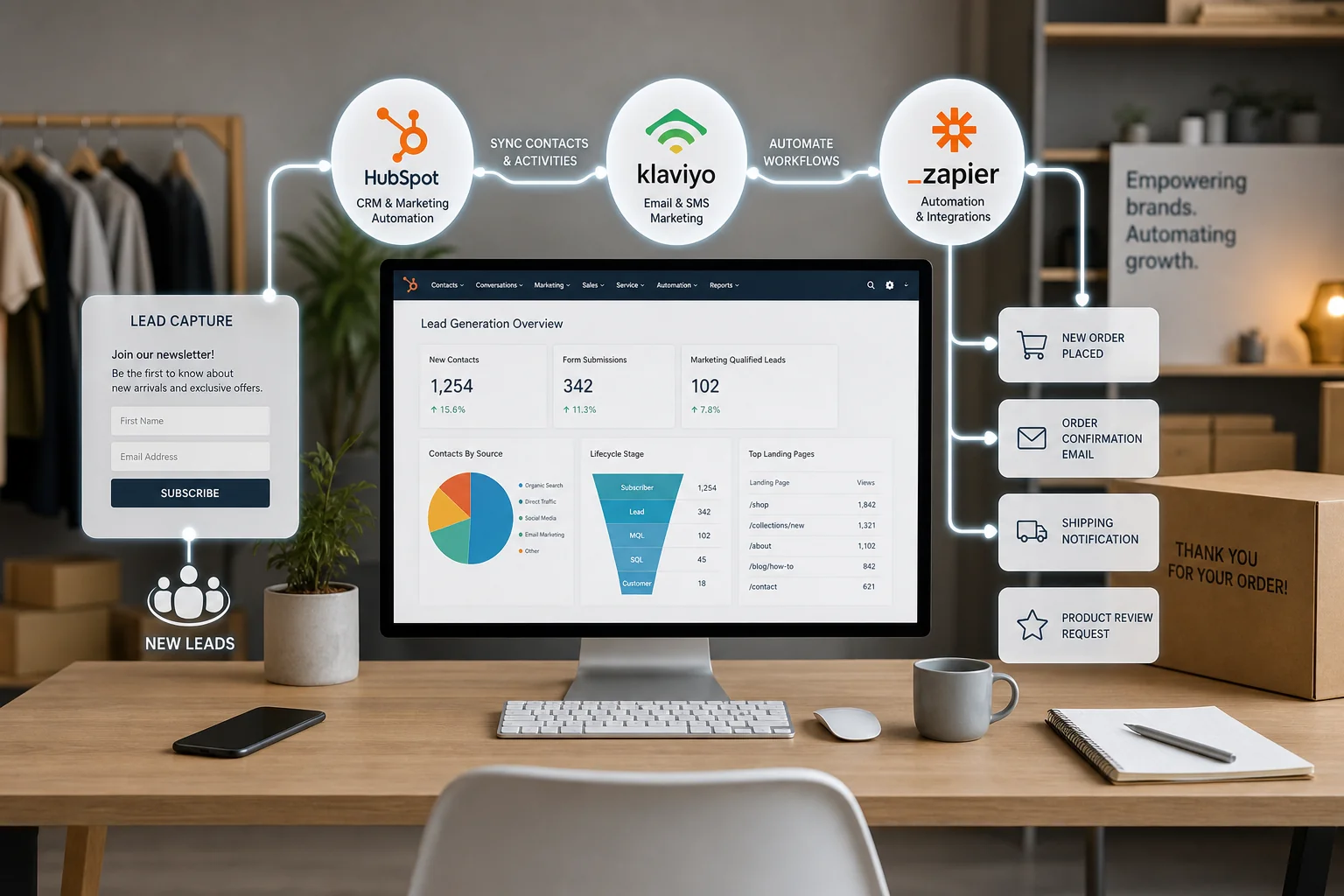
Digital illustration of an e-commerce workspace with a dashboard, showcasing an integrated automation stack with HubSpot, Kla

Scenario Setup

For example, imagine a small e-commerce business using a marketing automation stack that includes HubSpot for CRM, Klaviyo for email marketing, and Zapier to facilitate integrations. The business aims to streamline its lead nurturing process while ensuring data accuracy.

Automation Process Breakdown

1. Lead Capture: When a potential customer fills out a contact form on the website, HubSpot captures the lead's information. This data entry is crucial as it starts the automation cycle.

2. Segmentation: Using lead scoring in HubSpot, leads can be organized based on their engagement level and purchase history, so the right message reaches the right audience. This ensures that the right message reaches the right audience.

3. Drip Campaign Initiation: Once segmented, Klaviyo triggers a personalized drip email campaign tailored to each segment. For instance, first-time visitors might receive a welcome series, while returning customers get product recommendations based on their past purchases.

4. Integration via Zapier: To keep the data synchronized, Zapier connects HubSpot and Klaviyo. When a lead updates their information in HubSpot, Zapier automatically updates the corresponding records in Klaviyo, reducing manual data entry time and minimizing errors.

5. Performance Tracking: Finally, the business can use analytics tools to measure the effectiveness of these automated campaigns. This tracking will provide insights on open rates, conversion rates, and overall customer engagement.

In this hypothetical scenario, the use of these interconnected tools can significantly save time and improve marketing effectiveness. However, if not regularly audited, this setup risks becoming inefficient, especially if the data quality is compromised. A marketing audit can help identify potential issues within this stack and ensure that the tools align with business goals.

Tools and Resources
for Effective Audits

Conducting a marketing automation audit can be a challenging task. However, using the right tools and resources can make the process smoother and more effective.

Recommended Software and Platforms

  • HubSpot: This platform offers a comprehensive suite for managing marketing, sales, and customer service. Features like lead scoring and reporting help evaluate the effectiveness of your automation efforts. HubSpot integrates well with various tools through APIs, allowing seamless data flow.
  • Klaviyo: Primarily focused on email marketing, Klaviyo excels in creating targeted drip campaigns based on user behavior. Its analytics tools help track performance and optimize campaigns, making it a valuable asset for your audit.
  • Zapier: This automation tool connects different applications, allowing for custom workflows. For example, when a lead fills out a form on your website, Zapier can automatically add them to your email list and trigger a welcome email. This integration simplifies processes and saves time.
  • Make (formerly Integromat): Similar to Zapier, Make facilitates advanced integrations between various platforms. Its visual interface allows users to design complex workflows easily, which can be beneficial during an audit to identify bottlenecks or inefficiencies.

Helpful Guides and Checklists

To streamline your marketing automation audit, consider using guides and checklists tailored to your specific tools and objectives. Here are a few practical resources:

  • Audit Checklist: Create a checklist that includes key aspects to evaluate, such as data quality, integration efficiency, and user engagement metrics. This can help ensure you cover all necessary areas.
  • Process Documentation: Maintain detailed documentation of your current workflows. This helps identify gaps and areas for improvement during the audit.
  • Integration Guides: Many platforms offer documentation on how to integrate with others. Review these to understand the connections and data flow between your tools, ensuring your stack is working cohesively.

Using these tools and resources can enhance your marketing automation audit, helping you determine if your current stack is genuinely saving you time and delivering the results you expect.

Conclusion

A modern workspace featuring a laptop with colorful marketing metrics, gears, charts, and AI icons, symbolizing automation an

A marketing automation audit is essential for optimizing your marketing efforts. By reviewing your automation stack, you can identify inefficiencies, align your tools with business goals, and implement best practices. Understanding the role of AI tools can further enhance your marketing strategies.

Remember, a thorough audit not only saves time but also improves the overall effectiveness of your marketing initiatives. Start by evaluating your current processes and consider the potential benefits of refining your automation stack for better performance.

Questions
Answered

Common questions related to this topic.

What is a Marketing Automation Audit?

A marketing automation audit is a comprehensive evaluation of your marketing tools and processes. It focuses on assessing their performance, integration, and alignment with your business goals. This process can highlight areas where improvements can be made to enhance efficiency. Conducting a marketing automation audit offers several benefits, including identifying inefficiencies in your current setup and ensuring that your tools are effectively integrated. This can lead to improved workflows, better data quality, and ultimately, a more successful marketing strategy. To perform an automation stack review, start by listing all the tools you currently use. Evaluate their performance and integration capabilities, and consider user feedback. This systematic approach helps you identify redundant tools and opportunities for optimization. For a successful marketing tech audit, ensure that you involve key stakeholders and gather comprehensive data. Regularly updating your audit process to reflect changes in technology and regulations will help you stay compliant and efficient. Common challenges include data quality issues and integrating multiple tools seamlessly. These obstacles can hinder the effectiveness of your marketing strategies if not addressed properly during the audit process. When integrating AI tools into your marketing automation audit, consider their capacity for personalization and predictive analytics. Evaluate how these tools can complement your existing stack and streamline processes. Imagine a scenario where a lead fills out a contact form on your website. This triggers an automated email via your email marketing platform, which is integrated with your CRM. By reviewing this process in a marketing automation audit, you can identify any bottlenecks and optimize response times. Effective marketing automation audits can be facilitated by using tools like HubSpot, Klaviyo, and Zapier. These platforms offer features that help streamline the auditing process and improve overall efficiency.

What is marketing automation audit?

A marketing automation audit is an evaluation of your marketing tools and processes to assess their effectiveness. This audit helps identify areas of inefficiency and ensures your automation stack aligns with your business goals.

How does marketing automation audit work?

A marketing automation audit involves reviewing the tools and processes in place, analyzing their performance, and identifying integration issues. This systematic approach allows businesses to enhance workflows and optimize their marketing strategies.

Why should I conduct a marketing automation audit?

Conducting a marketing automation audit is essential to uncover inefficiencies and improve data quality. Regular audits ensure that your marketing tools are effectively supporting your business objectives and adapting to changes in your strategies.

Can a marketing automation audit improve my results?

Yes, a marketing automation audit can significantly improve your results by identifying areas for optimization. By streamlining processes and enhancing tool integrations, you can enhance overall marketing performance.

What are the common challenges in a marketing automation audit?

Common challenges include data quality issues and difficulties in integrating various tools. These challenges can impact the effectiveness of your marketing strategies if not properly addressed during the audit process.

When should I perform a marketing automation audit?

It's advisable to perform a marketing automation audit periodically, especially after significant changes in your marketing strategy or when introducing new tools. Regular audits help ensure ongoing effectiveness and alignment with business goals.

Free Strategy Call

Ready To GrowThis Into Results?

Discover how a marketing automation audit can transform your efficiency by evaluating your current tools and processes. Identify inefficiencies and optimize your integrations to truly save time and boost productivity in today’s fast-paced marketing world.

Opportunity Assessment
Channel Review
Growth Recommendations
No Obligation
OR

Prefer to reach out directly? We'll get back to you as soon as possible.

Contact MASS DATA Today
Scroll to Top