Understanding White Label Performance Marketing Agency
Discover how a white label performance marketing agency differs from traditional PPC.
Are you considering partnering with a white label performance marketing agency to enhance your service offerings? Understanding the nuances between white label performance marketing and traditional white label PPC can help you make informed decisions. As the digital landscape evolves, businesses require strategies that prioritize measurable outcomes, such as conversions and leads, rather than just clicks.

What is a White
Label Performance Marketing Agency?
Defining Performance Marketing
A performance marketing agency specializes in delivering marketing services focused on measurable outcomes. Unlike traditional PPC (pay-per-click) advertising, which primarily aims for clicks or impressions, performance marketing emphasizes results like conversions, leads, and sales. This model utilizes various channels - such as search, social media, and email - to achieve specific goals tied to client objectives.
Performance marketing often ties compensation to results, meaning agencies may be measured and rewarded against agreed-upon benchmarks. This approach helps align the agency's interests with those of the client, fostering accountability and transparency. This approach aligns the agency's interests with those of the client, fostering accountability and transparency.
Key Differences from Traditional White Label PPC
While both models allow agencies to offer outsourced marketing services under their brand, key differences set them apart:
- Focus on Outcomes: Performance marketing prioritizes measurable results, while traditional PPC may concentrate on traffic metrics like clicks or impressions. For instance, a performance marketing campaign might focus on achieving a specific number of conversions, whereas a PPC campaign might only report the number of clicks received.
- Attribution Models: Performance marketing employs sophisticated attribution models to measure the effectiveness of various channels. This includes techniques to attribute credit for conversions across multiple touchpoints, unlike many PPC campaigns that may rely on last-click attribution.
- Cross-Channel Integration: A performance marketing agency often integrates different marketing channels for a cohesive strategy, enhancing overall effectiveness. Traditional PPC might be limited to search engine ads without leveraging data from social media or email campaigns.
- Data-Driven Decisions: The performance marketing model relies heavily on data analytics to optimize campaigns continuously. Agencies analyze metrics like conversion rates and return on ad spend (ROAS) to refine strategies and improve outcomes.
By understanding these distinctions, small-to-mid-sized agency owners can better assess how a performance marketing agency can enhance their service offerings and address client needs effectively.
Benefits of Partnering with
a White Label Agency
Partnering with a white label agency can significantly enhance your agency’s service offerings while addressing concerns about quality control and client satisfaction. Here are some key benefits:
Enhanced Service Offerings
By collaborating with a performance marketing agency, you can expand your service range without the need for additional hiring. This agency provides specialized skills in areas like data analytics, cross-channel marketing, and attribution modeling, which can be difficult to manage in-house. For instance, imagine being able to offer advanced conversion rate optimization or sophisticated multi-channel campaigns to your clients, all under your brand.
Cost-Effective Solutions
Utilizing a white label agency can lead to more cost-effective solutions than maintaining an in-house team. Hiring new staff can be expensive, involving recruiting and onboarding costs on top of ongoing salaries and benefits. In contrast, a partnership allows you to pay for specific services as needed, often with transparent pricing structures. This way, you can allocate resources more efficiently, focusing on client acquisition and retention without the overhead of full-time employees.
Improved Client Retention and Satisfaction
Quality control is a top concern for many small to mid-sized agencies. By leveraging the expertise of a performance marketing agency, you can deliver consistent, high-quality results that meet client expectations. Regular reporting cadences and a clear white-label process can foster transparency. For example, you might receive bi-weekly performance reports detailing key metrics like Return on Ad Spend (ROAS) or Cost Per Acquisition (CPA), allowing you to stay informed and responsive to your clients’ needs. This proactive approach can significantly enhance client satisfaction and retention rates.
In summary, a white label agency not only broadens your offerings but also provides a cost-effective solution while improving client relationships.
Understanding Performance Marketing Fulfillment
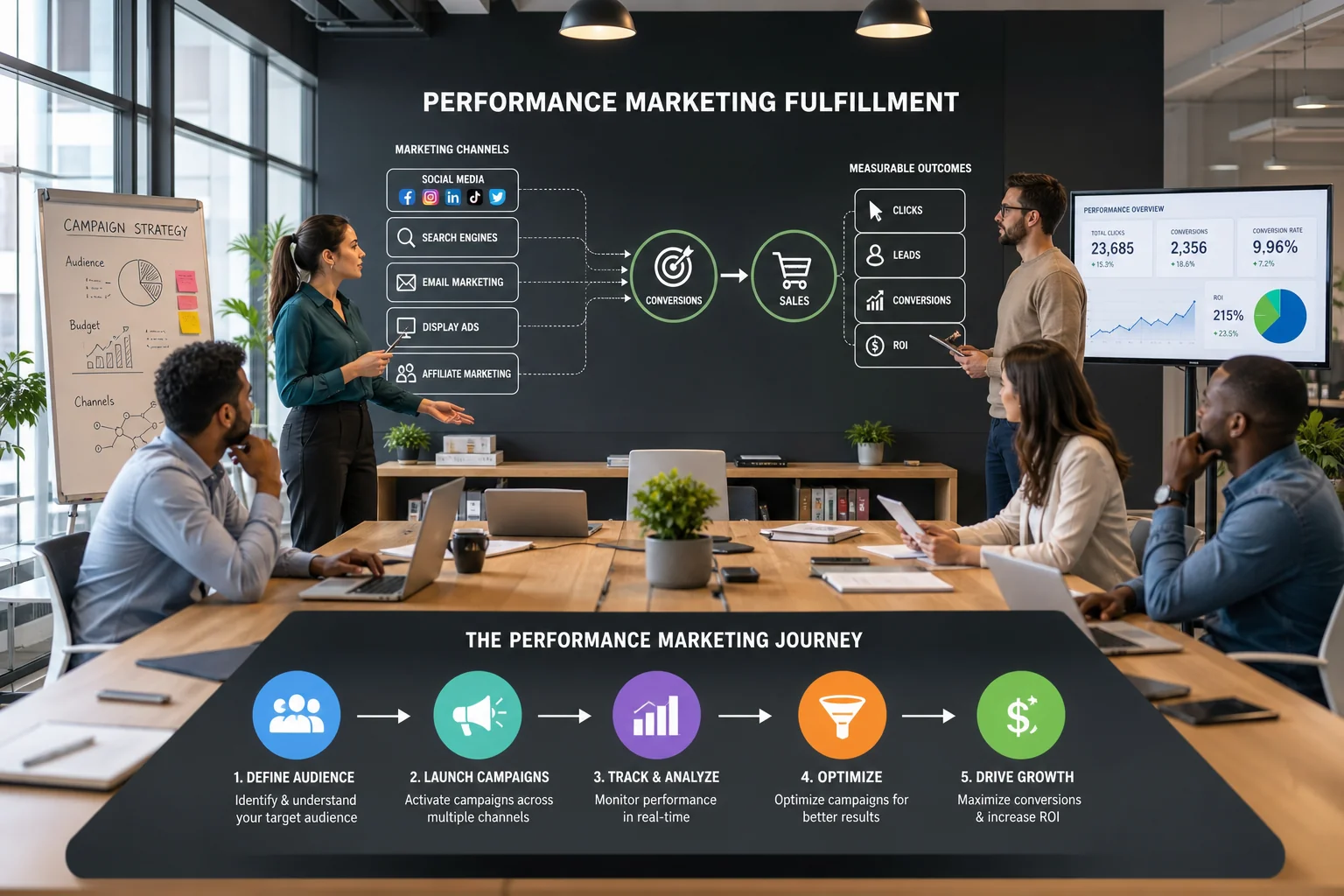
The Fulfillment Process
White label performance marketing fulfillment involves a series of structured steps designed to ensure that marketing campaigns achieve specific, measurable outcomes. Unlike traditional white label PPC, which often focuses solely on generating clicks, performance marketing spans various channels and relies on outcomes like conversions or sales.
The typical fulfillment process includes:
- Client Onboarding: Establish clear communication channels and gather client objectives.
- Strategy Development: Create a tailored marketing strategy based on the client's goals, audience, and budget.
- Execution: Implement campaigns across selected platforms, leveraging various marketing channels such as social media, email, and search.
- Monitoring and Optimization: Track performance continuously, adjusting tactics based on data analysis to enhance effectiveness.
- Reporting: Provide regular, transparent reports that detail campaign performance against key metrics.
Measurement Metrics: What to Track
To gauge the success of performance marketing efforts, agencies should focus on several key metrics:
- Conversion Rate: The percentage of users who complete the desired action, such as making a purchase or signing up.
- Cost Per Acquisition (CPA): How much it costs to acquire a new customer.
- Return on Ad Spend (ROAS): Revenue generated for every dollar spent on advertising.
- Click-Through Rate (CTR): The ratio of users who click on an ad to the number of total users who view it.
Tracking these metrics allows for clear insights into campaign performance and helps build trust with clients.
Attribution Models Explained
Attribution models determine how credit for conversions is assigned to various marketing touchpoints. Common models include:
- Last Click Attribution: Assigns conversion credit to the final channel the customer interacted with before converting.
- First Click Attribution: Gives all credit to the first touchpoint in the customer journey.
- Linear Attribution: Distributes credit evenly across all touchpoints.
- Time Decay Attribution: Assigns more credit to touchpoints closer in time to the conversion.
Implementing White Label
Growth Marketing Strategies
Steps to Integrate Services
To effectively integrate white label performance marketing services into your agency, follow these essential steps:
- Identify Core Services: Determine which performance marketing services you want to offer, such as PPC, social media marketing, or email campaigns.
- Choose a Reliable Partner: Select a white label agency with proven expertise and a transparent process. Look for agencies that provide clear reporting and case studies.
- Define Your Process: Establish a workflow that includes onboarding, campaign setup, and performance tracking. Create a documented process that outlines how your agency will communicate with the partner agency and your clients.
- Set Clear Expectations: Discuss deliverables, timelines, and reporting frequency upfront. This ensures alignment and minimizes misunderstandings.
Aligning with Client Goals
Understanding your clients' goals is crucial for effective performance marketing. Engage them in discussions to clarify their objectives. Here are some strategies:
- Conduct Goal-Setting Workshops: Host workshops to help clients articulate their marketing goals and key performance indicators (KPIs).
- Tailor Strategies: Customize your marketing strategies to align with each client’s unique objectives. For instance, if a client aims to boost e-commerce sales, focus on conversion rate optimization (CRO) and targeted ads.
- Regular Check-Ins: Schedule regular meetings to review campaign performance and adjust strategies as needed. This keeps clients informed and engaged.
Cross-Channel Marketing Techniques
Cross-channel marketing is vital for maximizing the effectiveness of performance marketing. Here are some techniques to consider:
- Integrate Channels: Use a mix of social media, email, and SEO to create a cohesive strategy. For instance, promote a new product launch through social media ads, followed by email campaigns to your subscriber list.
- Utilize Attribution Models: Employ various attribution models to understand how different channels contribute to conversions. This helps in allocating budgets effectively.
- Leverage Data Analytics: Use data analytics tools to track performance and adjust strategies in real-time.
Best Practices for Quality
Control in White Label Services

When partnering with a white label agency, maintaining quality control is crucial. Here are some best practices to ensure that expectations are met and client relationships remain strong.
Establishing Clear Expectations
From the outset, clear communication is key. Define the scope of work, deliverables, and timelines in detail. Consider using a service-level agreement (SLA) that outlines:
- Performance metrics (e.g., click-through rates, conversion rates)
- Reporting frequency (weekly, bi-weekly, monthly)
- Communication channels (email, project management tools)
This clarity helps avoid misunderstandings and sets a standard for performance.
Regular Reporting and Communication
To maintain a pulse on campaign performance, establish a regular reporting cadence. A good practice is to schedule:
- Weekly updates for ongoing campaigns
- Monthly performance reviews to assess overall progress
These reports should include key performance indicators (KPIs) relevant to the campaign goals. Regular communication will foster transparency and allow for adjustments based on real-time data. For example, if a particular channel underperforms, you can discuss strategies to pivot quickly.
Evaluating Agency Performance
Ongoing evaluation of your white label partner’s performance is essential. Consider implementing a review system that includes:
- Performance benchmarks based on past campaigns
- Client feedback mechanisms to gauge satisfaction
- Regular audits of the agency's processes
For example, conducting quarterly reviews can help identify trends in performance and areas for improvement. This structured approach ensures that the quality of service aligns with your agency’s standards and client expectations.
By following these best practices, you can mitigate the risks associated with outsourcing and ensure that your clients receive high-quality performance marketing services. This proactive approach not only builds trust but also enhances your agency’s reputation in the long run.
Common Challenges in
Performance Marketing Fulfillment
White label performance marketing presents unique challenges that agencies must navigate to maintain quality and client satisfaction. Understanding these challenges can help you make informed decisions when partnering with a white label performance marketing agency.
Managing Quality Assurance
Quality assurance is critical in performance marketing fulfillment. Unlike traditional PPC, which may only focus on clicks, performance marketing emphasizes measurable outcomes, such as conversions and revenue. To ensure quality:
- Regular Audits: Conduct periodic audits of campaign performance and results to verify that the white label agency meets your standards.
- Set Clear KPIs: Define specific key performance indicators (KPIs) that align with your clients' goals. This helps in monitoring effectiveness and ensures accountability.
- Feedback Loop: Establish a robust feedback mechanism to address any quality issues promptly. This encourages continuous improvement.
Navigating Data Privacy Regulations
With increased scrutiny on data privacy, compliance is a significant concern. Agencies must ensure that their white label partners adhere to regulations like GDPR and CCPA. Key steps include:
- Data Handling Policies: Verify that your white label partner has transparent data handling policies. Understand how they collect, store, and process client data.
- Consent Management: Implement consent management solutions that comply with regulations. This ensures that client data is handled legally and ethically.
Addressing Client Concerns
Client trust is paramount, especially when outsourcing services. Addressing concerns proactively can strengthen relationships. Consider these strategies:
- Transparent Reporting: Provide clients with clear and detailed reports on campaign performance. Include metrics such as cost per acquisition (CPA) and return on ad spend (ROAS).
- Open Communication: Maintain open lines of communication with clients about the white label process. Discuss potential challenges and how they will be managed.
- Consistent Updates: Regularly update clients on strategy adjustments and performance metrics to foster transparency and trust.
By tackling these challenges head-on, agencies can effectively leverage white label performance marketing services while ensuring quality, compliance, and client satisfaction.
Tools and Resources
for Effective Performance Marketing

Recommended Platforms
For small to mid-sized marketing agencies, selecting the right tools is crucial for successful performance marketing fulfillment. Platforms such as Google Ads, Facebook Ads, and LinkedIn Ads provide robust capabilities for targeted advertising. Additionally, analytics tools like Google Analytics 4 (GA4) and Looker Studio help in evaluating campaign performance and attributing conversions accurately. For example, utilizing GA4 enables you to track user interactions across For instance, analytics tools can help you track user interactions across different channels, which is useful for understanding the customer journey.
Analyzing Data and Performance
Data analysis is a cornerstone of performance marketing. Regularly reviewing key performance indicators (KPIs) such as Cost Per Acquisition (CPA), Return on Ad Spend (ROAS), and Conversion Rates is vital. Establish a consistent reporting cadence, perhaps weekly or bi-weekly, to assess campaign effectiveness. This allows for timely adjustments and fosters accountability. By leveraging dashboards from platforms like Looker Studio, you can visualize data trends and share insights with your team, ensuring everyone stays aligned.
Leveraging AI for Optimization
Artificial Intelligence (AI) is transforming how agencies optimize their campaigns. Many advertising platforms now include AI-driven features that enhance audience targeting and bid strategies. For instance, AI can help predict which audience segments are more likely to convert, allowing you to allocate budget more effectively. For example, consider implementing automated bidding strategies that adjust in real-time based on performance data. This approach can lead to more efficient ad spend and better overall results.
By utilizing these tools and resources, a white label agency can enhance service offerings while minimizing quality control concerns, ultimately leading to a more successful client partnership.
Hypothetical Example of
White Label Performance Marketing
Scenario Overview
For a small marketing agency, let’s consider an illustrative example where the agency has been primarily focused on social media management. They want to expand their offerings to include performance marketing but lack the expertise and resources to do so in-house. They decide to partner with a white label agency to fulfill this need. This partnership allows them to offer a broader suite of services without the overhead of hiring new staff.
Implementation Steps
- Initial Consultation: The agency meets with the white label performance marketing agency to discuss their specific goals, target audience, and budget.
- Campaign Strategy Development: Together, they outline a campaign that incorporates various channels, including email marketing, social media ads, and search engine marketing. They prioritize measurable outcomes such as conversion rates and cost per acquisition (CPA).
- Execution: The white label agency handles all aspects of the marketing campaign, from ad creation to audience targeting. They utilize advanced analytics tools to track performance in real-time.
- Reporting Cadence: The agency agrees on a reporting schedule, such as bi-weekly updates, to review performance metrics like return on ad spend (ROAS) and overall campaign effectiveness.
- Client Communication: The small agency presents the campaign results to their clients under their own brand, maintaining a seamless client experience.
Measurable Outcomes
By the end of the campaign, the small agency can analyze key performance indicators (KPIs) such as:
- Conversion Rate: Aiming for a target of 5% or higher.
- Cost Per Acquisition: Keeping CPA below $50.
- Return on Ad Spend (ROAS): Achieving a target of at least 4:1.
These measurable outcomes provide tangible value to their clients and enhance the agency’s reputation without compromising quality or client trust. Through this collaboration, the agency is able to expand its service offerings confidently and effectively, all while keeping the client experience intact.
Conclusion
In summary, a white label performance marketing agency can significantly elevate your agency's offerings. By focusing on performance-driven results, these agencies provide a pathway to enhance your service capacity without the complexities of hiring new staff. Key points include the importance of understanding performance marketing fulfillment and the need for quality control in service delivery.
These insights empower you to make strategic choices that align with your agency's goals. Start by exploring potential partnerships that prioritize measurable outcomes and quality assurance. Consider taking the next step towards expanding your marketing services today.
Questions
Answered
Common questions related to this topic.
What is a white label performance marketing agency?
A white label performance marketing agency provides marketing services that other agencies can brand as their own. This model allows smaller agencies to expand their service offerings without the need to hire additional staff, ensuring quality service delivery under their brand name.
How does a white label performance marketing agency work?
The agency utilizes its expertise to handle various marketing tasks, including campaign management and analytics, while the partner agency presents these services to clients as their own. This arrangement enables agencies to maintain client relationships without the operational overhead associated with staffing.
Why should I consider white label performance marketing?
Partnering with a white label performance marketing agency can enhance your service offerings and scalability. It allows you to focus on client relationships and strategy while the agency handles execution, ultimately leading to improved client satisfaction and retention.
When should I use white label growth marketing services?
White label growth marketing services are ideal when you want to expand your capabilities without investing in new hires. This is particularly beneficial during peak seasons or when venturing into new markets, allowing you to meet client demands efficiently.
Can I trust the quality of services from a white label performance marketing agency?
While many agencies provide quality services, it’s essential to conduct thorough due diligence. Review case studies, request samples of their work, and understand their processes to ensure they meet your agency's standards and can maintain quality control.
What are the common challenges faced in performance marketing fulfillment?
Common challenges include maintaining consistent quality, ensuring effective communication, and managing client expectations. Agencies should establish clear guidelines and reporting processes to mitigate these issues and foster a successful partnership.
Ready To GrowThis Into Results?
Discover how a white label performance marketing agency differs from traditional PPC.
Prefer to reach out directly? We'll get back to you as soon as possible.
Contact MASS DATA Today