MASS DATA — AI Marketing Automation

AI Customer Support for Marketing Agencies: What Can and Cannot Be Automated

Discover what aspects of AI customer support can be automated for marketing agencies and the limitations to consider.

AI customer support for marketing agencies is revolutionizing how businesses interact with clients. As marketing operations managers and small business owners explore AI tools, understanding what can and cannot be automated is crucial. While AI can enhance efficiency and streamline responses, it is essential to recognize its limitations.

Key Takeaways
AI customer support can significantly improve response times and efficiency.
Not all customer interactions are suitable for automation; some require human intervention.
Implementing AI involves specific steps and best practices to maximize effectiveness.
A sleek office scene with a friendly AI interface assisting a diverse marketing team, featuring holographic analytics and a c

Understanding AI Customer
Support for Marketing Agencies

AI customer support  refers to the application of artificial intelligence technologies to manage customer inquiries and streamline support processes. This can encompass everything from chatbots addressing frequently asked questions to more sophisticated systems that integrate with customer relationship management (CRM) tools.

Key Components of AI Customer Support

  • AI Chatbots: These tools simulate human conversation using natural language processing (NLP) to provide quick answers to common questions, thereby reducing the workload on human agents.
  • Machine Learning: This enables AI systems to learn from previous interactions, improving responses based on what has been effective in the past.
  • Integration with CRM Systems: AI tools can connect with platforms like HubSpot or Salesforce to access customer data, allowing for more personalized support.
  • Automated Workflows: Predefined actions that trigger automatically based on specific customer interactions, such as sending a follow-up email when a lead fills out a contact form.

How AI Chatbots Function in Customer Support

AI chatbots operate through a combination of algorithms and natural language processing. When a customer sends a message, the chatbot analyzes it to determine the intent behind the query.

  • Intent Recognition: This helps the chatbot understand what the customer is asking. For example, if a user inquires about pricing, the system recognizes that intent and retrieves the relevant information.
  • Fallback Mechanism: If the chatbot encounters a question it cannot answer, it should seamlessly transfer the conversation to a human agent. This ensures that customers receive accurate information when needed.

However, it’s important to note that AI chatbots are not infallible. They can struggle with slang, complex inquiries, or context. While they can handle routine questions effectively, nuanced conversations often still require human empathy and understanding.

Benefits of AI Customer
Support for Marketing Agencies

AI customer support can streamline operations and enhance client interactions. However, understanding its capabilities and limitations is crucial for effective implementation.

Enhanced Efficiency in Handling Queries

AI tools can significantly increase efficiency in managing customer inquiries. For instance, chatbots equipped with natural language processing can handle common questions, such as pricing or service details. When a lead fills out a contact form, a chatbot can automatically respond with predetermined answers, freeing up human agents to address more complex issues.

Some specific tasks AI can automate include:

  • Routine Question Handling: FAQs about services or account settings can be addressed without human intervention.
  • Lead Qualification: AI can ask qualifying questions and gather essential information before passing leads to a human agent.
  • 24/7 Availability: AI systems can operate around the clock, ensuring that customer inquiries are addressed promptly at any time.

Improved Customer Experience and Engagement

AI customer support can enhance the overall customer experience by providing quick and accurate responses. Chatbots can deliver personalized messages based on user behavior and preferences, fostering engagement.

However, AI does have limitations. For example, nuanced conversations that require empathy or deep understanding may still necessitate human intervention. Additionally, while AI can understand many common phrases, it may struggle with slang or complex inquiries.

To maximize effectiveness, agencies should implement a fallback mechanism that seamlessly transfers complex queries to human agents. This combination allows for efficient handling of straightforward questions while ensuring that customers receive the attention they need for more intricate issues.

In summary, by leveraging AI tools, marketing agencies can achieve greater efficiency and improve customer interaction. However, a balanced approach that includes human oversight remains essential for handling more complex support needs.

Limitations of AI
Chatbots in Customer Support
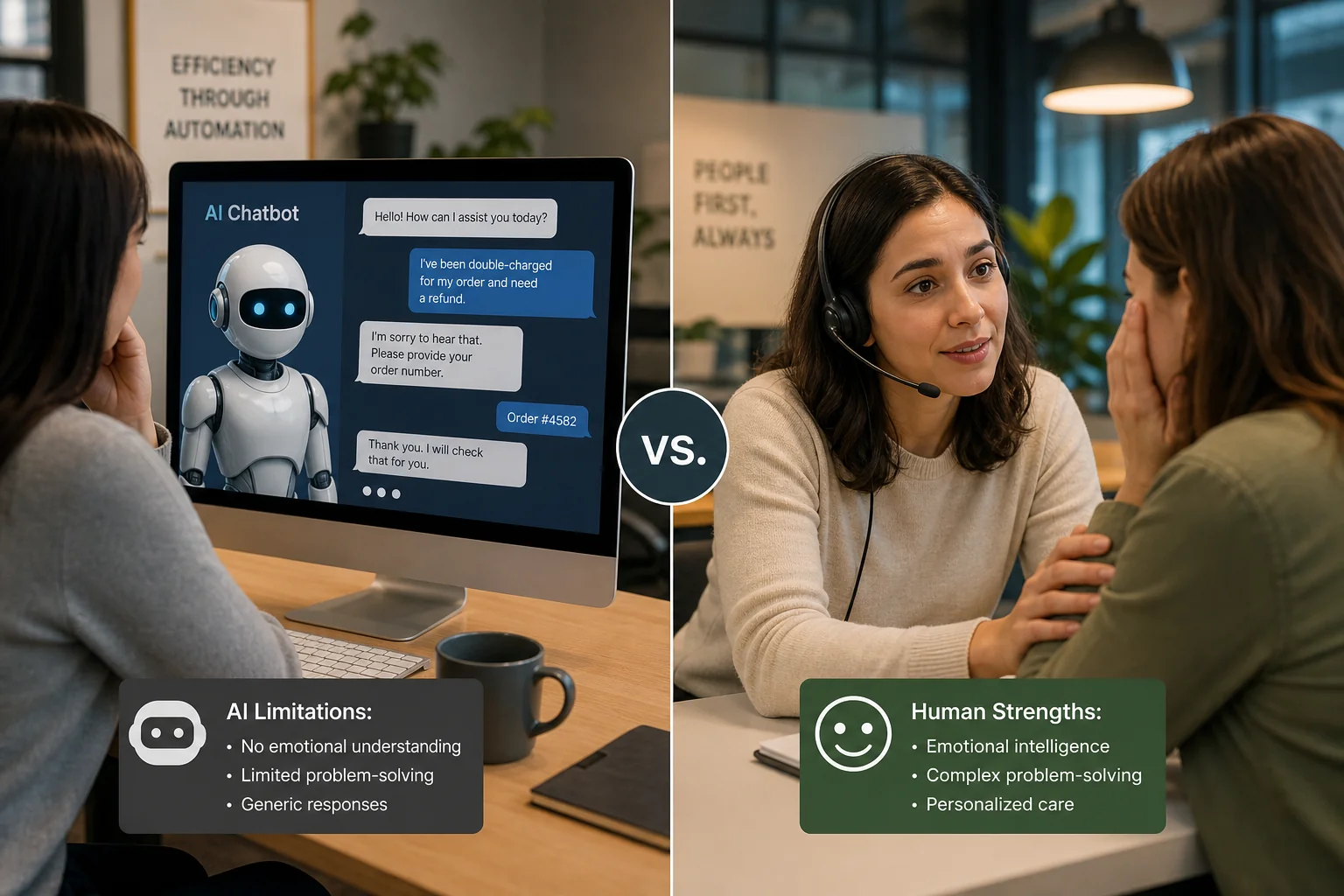
A split scene: an AI chatbot lacks emotion on one side, while a human rep offers empathetic support in a warm office setting.

While AI chatbots can significantly enhance customer support for marketing agencies, they come with notable limitations. Understanding these limitations is crucial for marketing operations managers and small business owners considering AI tools.

Common AI Chatbot Limitations

  • Understanding Context: AI chatbots often struggle with nuanced language and context. They may misinterpret slang, idioms, or complex queries. For instance, if a customer asks, “Can I get a refund on my subscription?” a chatbot might not recognize the urgency behind the question and provide a generic response instead.
  • Handling Complex Queries: While chatbots excel at answering frequently asked questions, they can falter with more complicated issues that require critical thinking or empathy. For example, if a user needs assistance with a technical problem with a marketing tool integration, a human agent will be better equipped to analyze the situation.
  • Data Privacy Concerns: Integrating AI customer support with other platforms can raise data privacy issues. Chatbots that handle personal data may need to adhere to applicable regulations, which can complicate data handling and user consent processes. This requires careful programming and monitoring to ensure compliance, so review the specific requirements that apply to your agency.
  • Limited Integration Capabilities: Not all chatbots can seamlessly integrate with every CRM or marketing tool. Some tools offer broad automation and connector support while others are more limited. Verify integration options for each tool, since gaps can limit their effectiveness and the automation of support tasks.

When to Rely on Human Support

In instances where empathy, complex problem-solving, or deep contextual understanding is required, human support remains essential. For example, when a customer expresses frustration over a billing issue, a human agent can provide reassurance and a personalized solution, which a chatbot may not manage effectively.

Ultimately, while AI customer support can streamline certain processes, knowing when to involve human agents is key to maintaining high-quality customer service.

Implementation Steps for
AI Customer Support

Choosing the Right AI Tools

When selecting AI tools for customer support, prioritize reliability over hype. Many options exist, but not all are suitable for every task. Look for tools that focus on:

  • Natural Language Processing (NLP): This allows chatbots to understand user inputs better.
  • Machine Learning Capabilities: Choose tools that can learn and adapt over time, improving responses based on previous interactions.
  • Scalability: Ensure that the tool can grow with your agency's needs.

Evaluate tools based on real customer feedback, not just marketing claims. For example, imagine using a chatbot that can answer frequently asked questions, allowing human agents to focus on complex inquiries.

Integrating AI with Existing Systems

Integration is key to maximizing the benefits of AI customer support. Here’s how to effectively connect AI tools with platforms like HubSpot or Klaviyo:

  1. Identify Key Functions: Determine which customer interactions can be automated and which require human oversight.
  2. Map Out Workflows: Create a clear workflow that outlines how the AI will interact with customers and where human agents will step in.
  3. Test Integrations: Before going live, test the integration to ensure that data flows smoothly between the AI tool and your CRM system.

Best Practices for Using
AI in Customer Support
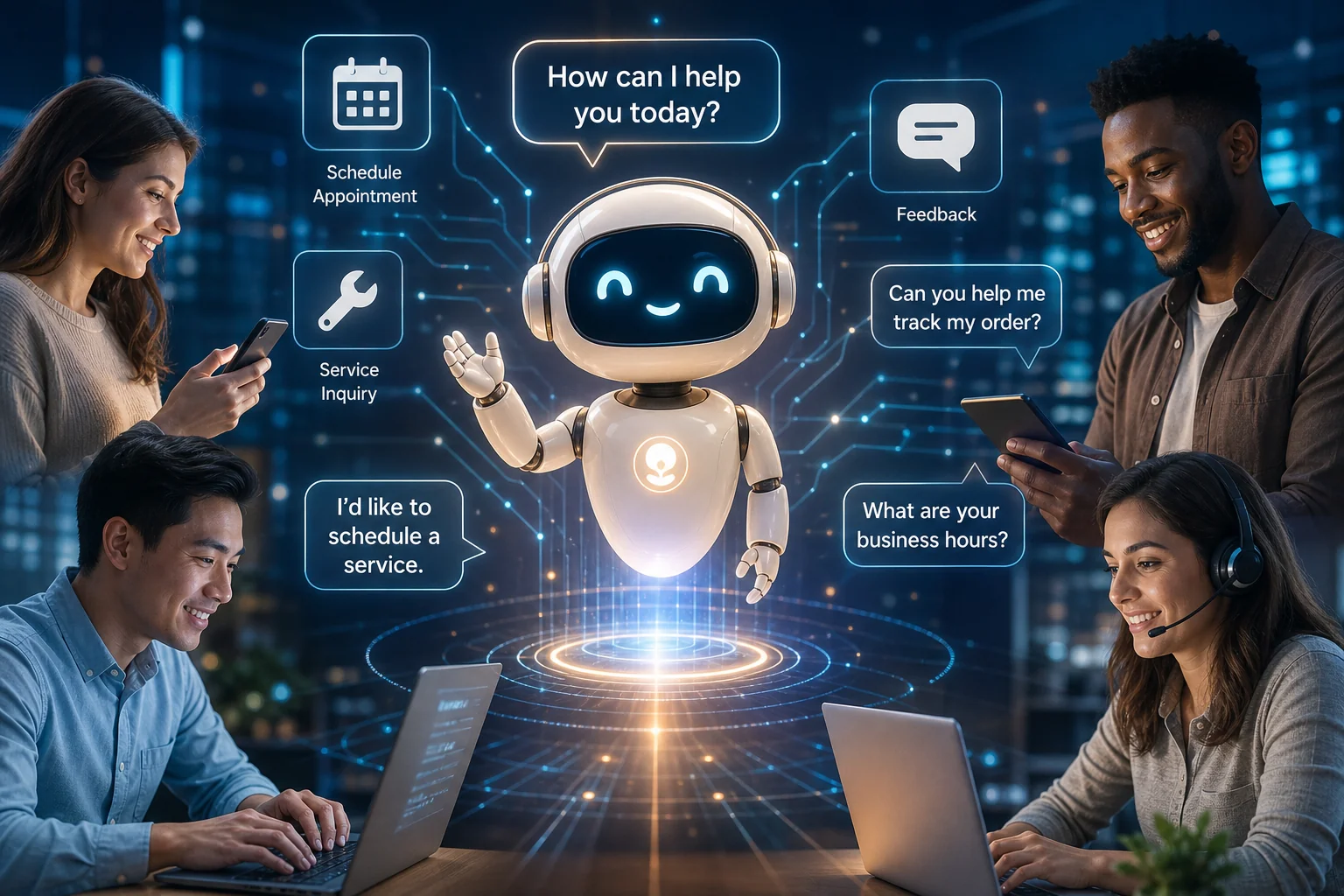
A friendly chatbot assists diverse customers on devices, surrounded by glowing data elements, symbolizing efficient AI suppor

Designing Effective Chatbot Conversations

When integrating AI customer support for marketing agencies, designing effective chatbot conversations is vital. Start by defining clear intents that align with common customer queries. For instance, if a potential client fills out a contact form, the chatbot should recognize this intent and respond with relevant information about services or schedule a follow-up.

To create a seamless experience, use a conversational flow that guides users logically through their inquiries. Incorporate fallback mechanisms that allow the chatbot to transfer users to human agents when it encounters complex issues. This ensures that while routine questions are handled efficiently, more nuanced interactions receive the attention they require.

Continuous Monitoring and Optimization

AI systems are not set-and-forget solutions. Continuous monitoring and optimization are crucial for maintaining their effectiveness. Regularly review chatbot interactions to identify common pain points or misunderstandings. For example, if many users ask a specific question that the chatbot struggles to answer, consider updating the training data or refining the conversation flow.

Additionally, leverage analytics from your CRM system, such as HubSpot or Klaviyo, to track user engagement and satisfaction. This data can inform adjustments to both the chatbot and the overall customer support strategy. As the technology evolves, so should your approach, ensuring that your AI tools remain effective and relevant.

By following these best practices, marketing agencies can effectively harness AI for customer support while remaining mindful of its limitations. This balanced approach can enhance customer interactions while minimizing the risk of generic outputs or misunderstandings.

Common Challenges and Solutions
in AI Customer Support

Data Quality Risks

Incorporating AI customer support for marketing agencies comes with inherent data quality risks. The effectiveness of AI tools largely depends on the quality of the data they are trained on. If an AI system is fed inaccurate or outdated information, it can lead to poor customer interactions.

For example, if a chatbot is programmed with outdated product details, it may provide incorrect answers to customer inquiries. To mitigate this risk, ensure that your data sources are regularly updated and validated. Implementing a data governance strategy can help maintain high-quality data, which is crucial for reliable AI performance.

Navigating Customer Expectations

Another challenge is managing customer expectations regarding AI capabilities. Many customers expect AI tools to provide instant and accurate responses. However, AI chatbots often struggle with complex inquiries that require human empathy or nuanced understanding.

To address this, consider setting clear expectations for your customers. You can inform them when they are interacting with a bot versus a human agent. Additionally, implementing a fallback mechanism is essential. This allows the AI to escalate complex questions to human agents when necessary, ensuring that customers receive appropriate support.

Integrating AI customer support tools with your existing systems, such as HubSpot or Klaviyo, can streamline workflows. For instance, when a lead fills out a contact form, this can trigger an automated response from the chatbot. However, if the inquiry is too complex, the system can route it to a human for further assistance. By clearly defining the capabilities and limitations of your AI tools, you can enhance customer satisfaction while leveraging the efficiency of automation.

Tools and Resources
for AI Customer Support

A modern customer support center with diverse agents using AI tools, featuring sleek tech and a collaborative, innovative atm

Recommended AI Tools for Marketing Agencies

When considering AI customer support for marketing agencies, several tools can enhance your operations. Here are some reliable options:

  • Chatbot Platforms: A range of chatbot tools can manage basic inquiries. For example, when a lead fills out a contact form, a chatbot can automatically send a confirmation message or provide initial information. Confirm which chatbot features each platform offers before selecting a tool.
  • Automated Workflow Tools: Workflow automation platforms let you connect AI chatbots with other tools to automate repetitive tasks. For instance, if a user engages with your chatbot, you can set up a workflow to log the interaction in your CRM, enhancing customer insights. Check each platform's supported connectors before building these workflows.
  • NLP Solutions: Some platforms use natural language processing to improve chatbot responses and can handle more complex interactions, though they may still require fallback systems to transfer users to human agents when necessary. Evaluate the NLP capabilities of any tool against your specific needs.

These tools can significantly streamline support processes, but keep in mind their limitations.

Resources for Learning More About AI Integration

To effectively integrate AI into your customer support, continuous learning is essential. Here are some recommended resources:

  • Online Courses: Platforms like Coursera and Udemy offer courses on AI and automation in customer support. Look for courses that cover practical applications and integrations.
  • Webinars and Tutorials: Many AI tools provide webinars and video tutorials. These resources can help you understand how to implement specific features and best practices for your agency.
  • Community Forums: Joining forums or groups on platforms like LinkedIn can provide insights from peers who have faced similar challenges. Engaging with these communities can help you navigate common pitfalls and share successful strategies.

By leveraging these tools and resources, marketing agencies can enhance their AI customer support capabilities while remaining aware of their limitations and potential risks.

Hypothetical Use Case: AI
Customer Support in Action

Scenario Overview

For a marketing agency, integrating AI customer support can streamline operations and enhance client interaction. Let’s explore a scenario where a potential client submits a query through a website form. The agency uses AI tools integrated with their customer relationship management (CRM) system, like HubSpot, to manage these interactions efficiently.

Step-by-Step Workflow Explanation

  1. Lead Submission: When a lead fills out an inquiry form on the agency's website, this action triggers an automation in HubSpot.
  2. AI Chatbot Interaction: The integrated AI chatbot, utilizing natural language processing, instantly engages the lead. It acknowledges the inquiry and requests details about their specific needs, ensuring a personalized touch.
  3. Intent Recognition: The chatbot analyzes the input to identify the lead's intent. For example, if the lead asks about social media management services, the AI recognizes this intent and responds with relevant information.
  4. Information Delivery: The chatbot can provide automated responses about service packages, pricing, and case studies, which are pre-programmed in the system. However, if the inquiry requires nuanced understanding or goes beyond standard FAQs, the chatbot initiates a fallback mechanism.
  5. Human Agent Handoff: Should the chatbot fail to comprehend the query or if the lead requests to speak to a human, it seamlessly transfers the conversation to a human agent. The agent receives a summary of the interaction, including the lead's previous questions, which helps in providing context quickly.
  6. Follow-Up Automation: After the conversation, regardless of whether it was handled by the chatbot or a human agent, an automated follow-up email is sent through HubSpot. This email thanks the lead for their inquiry and outlines the next steps, enhancing the overall customer experience.

This hypothetical workflow illustrates how AI customer support can enhance efficiency while acknowledging the limitations of automation. While chatbots can handle routine queries effectively, they should always have a mechanism to escalate complex issues to human agents.

Conclusion

A diverse team collaborates in a vibrant office, discussing AI in customer support, with abstract tech visuals on a screen.

In summary, AI customer support for marketing agencies offers significant advantages, such as efficiency and responsiveness. However, it also has limitations, particularly in handling complex customer inquiries that require empathy and nuanced understanding. Recognizing these factors is essential for leveraging AI effectively in your marketing strategy.

Consider starting with a pilot program to test the waters of AI integration. By taking incremental steps, you can enhance your customer support while maintaining the quality of human interactions. Embrace the potential of AI, but ensure it complements your existing processes for the best results.

Questions
Answered

Common questions related to this topic.

What is ai customer support for marketing agencies?

AI customer support for marketing agencies refers to the use of artificial intelligence tools, such as chatbots and automated systems, to handle customer inquiries and support tasks. These tools can manage routine questions, allowing human agents to focus on more complex issues, ultimately enhancing efficiency.

How does ai customer support for marketing agencies work?

AI customer support operates by utilizing natural language processing and machine learning to understand and respond to customer queries. When a customer sends a question, the AI analyzes it, identifies the intent, and provides an appropriate response, streamlining the support process.

What are the benefits of using ai customer support for marketing agencies?

The main benefits include increased efficiency, reduced response times, and the ability to handle multiple inquiries simultaneously. This allows marketing agencies to enhance customer satisfaction while freeing up human resources for strategic tasks that require a personal touch.

Can all customer interactions be automated with ai customer support?

Not all interactions can be fully automated, especially those requiring nuanced understanding and empathy. Complex issues often necessitate human involvement, while AI can effectively manage routine inquiries, providing a balanced approach to customer support.

What are some limitations of ai customer support for marketing agencies?

AI chatbots may struggle with understanding context, slang, or intricate inquiries, which can lead to incorrect responses. Additionally, while they can handle many tasks, they lack the emotional intelligence that human agents bring to customer interactions.

When should marketing agencies consider implementing ai customer support?

Marketing agencies should consider implementing AI customer support when they experience high volumes of routine inquiries or when aiming to improve response times. It's essential to assess the specific needs of the agency and the types of queries that could be effectively managed by AI tools.

Free Strategy Call

Ready To GrowThis Into Results?

Discover what aspects of AI customer support can be automated for marketing agencies and the limitations to consider.

Opportunity Assessment
Channel Review
Growth Recommendations
No Obligation
OR

Prefer to reach out directly? We'll get back to you as soon as possible.

Contact MASS DATA Today
Scroll to Top